





















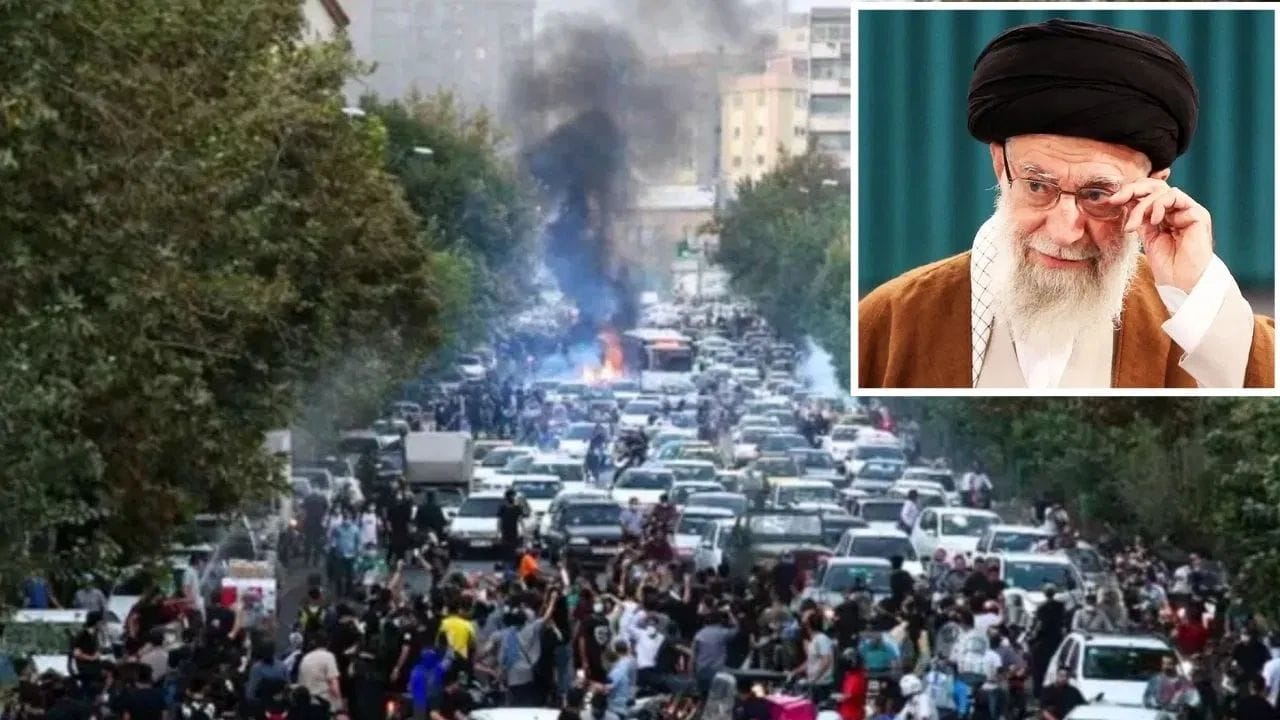
Protests against Iran's Supreme Leader, Ayatollah Ali Khamenei, have intensified. Government offices are being attacked in the capital Tehran. The rebels are surrounding and killing the soldiers. Pictures of the killing of police officers by a mob have also surfaced. Insurgency has spread out of control in 30 of Iran's 31 provinces. Anarchy has broken out in more than 110 cities of the country.
Anarchy spread in Iran
Fires are seen everywhere in the capital Tehran. Clashes have broken out between the rebels and the army, with the rebels setting fire to every street. Chaos has spread across Iran overnight. Police vehicles were set on fire in Tehran. Internet and telephone lines were also cut in the country on Thursday night after protesters joined protests in Tehran and other parts of the country.
Internet company CloudFlare and another company, NetBlocks, reported internet outages. Attempts were made to contact landlines and mobile phones from Dubai to Iran, but calls were unsuccessful. The protests that started in Iran due to the economic crisis have now spread across the country.
The US issued an advisory
According to reports, markets and shops were closed in more than 50 cities, both large and small, in the four provinces of Iran's Kurdish region: Kurdistan, West Azerbaijan, Kermanshah and Ilam. This is being seen as a sign of solidarity with the ongoing protests in Iran. The US State Department has issued an advisory urging citizens to avoid traveling to Iran. Currently, internet access is either disrupted or there are complaints of slow speeds in many parts of the country.
Large crowds of anti-government protesters have gathered on the streets of the capital, Tehran, in the dark of night. They are setting fire to security forces' cars and motorcycles. Fires are visible everywhere, and even government offices have not been spared. Internet services have been shut down in Iran due to the large number of protests.
Nationwide protests
The protests that started in Iran due to the economic crisis have now spread across the country. Wednesday saw the most intense phase of the protests, with protests spreading to rural towns and major cities in every province. However, daily life continued as usual in Iran's capital Tehran and elsewhere. At least 38 people have been killed so far in the violence during the protests, while more than 2,200 have been detained, according to the US-based Human Rights Activists News Agency.
Pressure mounted on Ayatollah Ali Khamenei
The protests have increased pressure on Iran's government and its supreme leader, Ayatollah Ali Khamenei. So far, authorities have not shut down the internet or deployed heavy security forces to the streets, as they did in 2022 to quell protests following the death of Mahsa Amini in police custody.
Iran's exiled crown prince called for demonstrations
Meanwhile, the protests have been largely leaderless, although a call for protests by Iran's exiled crown prince will serve to test whether protesters are swayed by messages from abroad. According to activists, at least 37 protests took place across the country on Wednesday, including in Shiraz, where a video surfaced online showing anti-riot trucks spraying protesters with water. Protests continued in Iran's Kurdistan province on Thursday, with traders keeping their shops closed.
. Source