















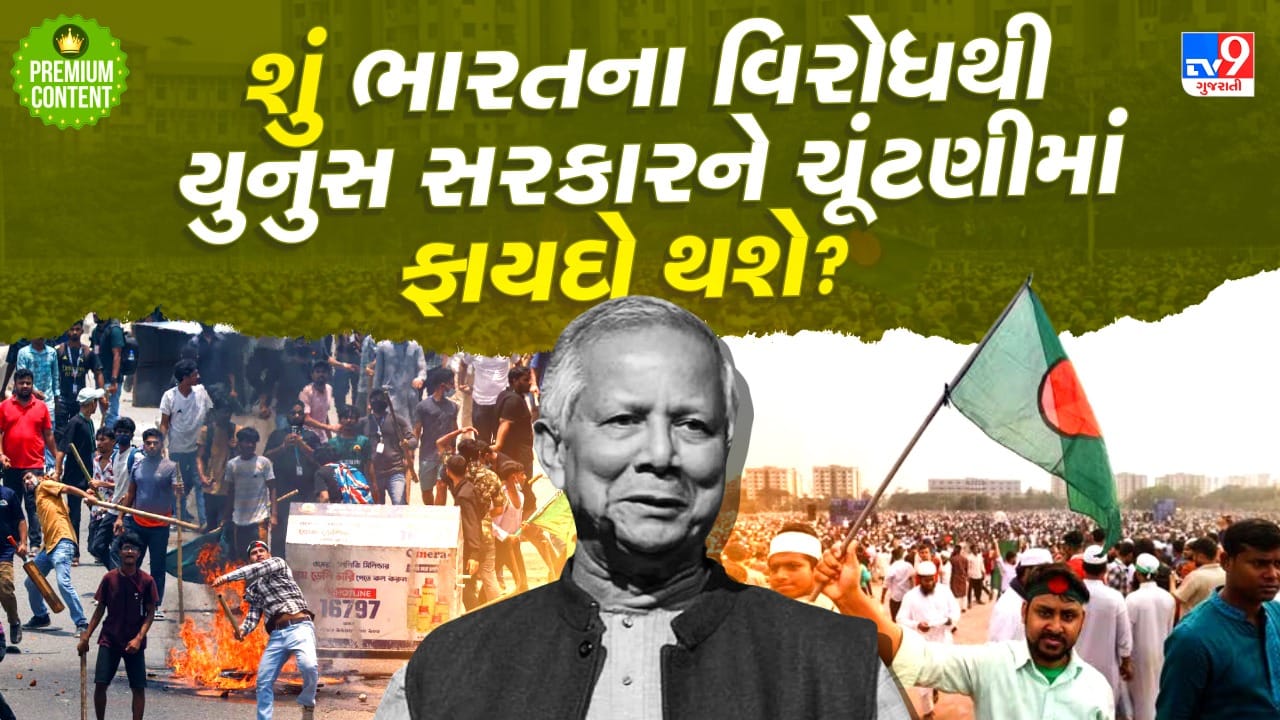
Ever since Mohammad Yunus took over the reins of Bangladesh, the opposition forces in India are gaining strength. Minority Hindus are being continuously targeted and attacked. Their property is being looted. Their daughters are being abducted and abused. Meanwhile, China and Pakistan are also trying their best to take advantage of this opportunity. India is Bangladesh's largest partner in Asia and India has invested heavily in Bangladeshi projects. In such a situation, straining India's relations or giving more importance to China and Pakistan by sidelining India will not prove to be beneficial for Bangladesh.
India's opposition proved too costly for Maldives… on the brink of economic misery
Two years ago there was a general election in Maldives, shortly before this, the leader of the Progressive Party of Maldives, Mohammad Moijju, started speaking against India. He accused the then government of being friendly with India and said that Delhi was interfering with them there. At the same time, Moijju gave the slogan of India out. Under which it was demanded that Indian soldiers stationed in Maldives should be removed. Also, Indian made goods should also be removed from the market.
Moijju talked about severing ties with India on all fronts, calling China its main partner. This situation happened when Indian tourists have played a major role in the economy of Maldives. Moijju's anti-India narrative won the election. However, it is different that later he tried to do damage control by correcting his mistake. That is, winning elections by making anti-India statements has become a very handy weapon. Be it Pakistan, Maldives or Bangladesh. Relations with India have soured after the overthrow of Sheikh Hasina's government in Bangladesh. The situation is that even small forces are making their own agenda to oppose India.
All this is happening at a time when parliamentary elections in Bangladesh are just a few months away and the Muslim-backed interim government of Mohammad Yunus is in power. Anti-Sheikh Hasina, Awami League and Chhatra League slogans continued to echo in Dhaka on Saturday.
In Maldives, Moijju also raised the slogan 'India Out' during the election campaign
Maldivian President Mohammad Moijju raised the slogan 'India Out' during his election campaign and distanced himself from India as soon as he assumed office. Several ministers of his government also made disastrous remarks against Narendra Modi. Only a few months after showing India's courage, Maldives came to the verge of poverty and started asking India for financial help, now Maldives has realized its mistake and improved its relations with India.
However, this cannot happen in the case of Bangladesh. The relations between Bangladesh and India are also very close historically. Since 1971 till date, the two countries have been interdependent in trade, energy, connectivity, security and regional cooperation. Bangladesh is not in a position to completely overlook India.
However, it is also a reality that the anti-India atmosphere and rhetoric increases as elections approach in Bangladesh. Opposition forces often accuse the current government of being pro-India. Doing so is considered politically advantageous. Because it can inflame nationalistic sentiment and divert attention from domestic problems. In this context, India becomes a very handy political weapon.
Why did the opposition to India suddenly increase?
Opposition to India in Dhaka politics is not just a coincidence but a planned experiment. Sheikh Hasina was considered a trusted partner of India and with her departure, the new power made the first move to cut ties with Delhi.
One of the reasons for this is that there is an increased inclination towards China in Dhaka. Relations between India and China have been strained over frequent border disputes. Even sitting on the lap of China, Mohammad Yunus' government is giving a message that it is anti-India. On the other hand, Pakistan, which is Bangladesh's staunch enemy, has also started to sit down. Which is being seen through the glasses of religion. The barbarism happening to Hindus in Bangladesh is also happening at the behest of Pakistan.
What is the benefit of India's opposition to the current government?
Nobel Peace Prize laureate and economist Mohammad Yunus had nothing to do with politics before. After coming to power in Bangladesh, he formed an interim government. Since then, violence against minorities, especially Hindus, increased in Dhaka, but the Yunus government did not react strongly. The government did not make any major statement on it. Taking action is a far cry, despite the protests of other countries including India, the continuation of violence did not stop.
A few months ago, Yunus had made a very provocative statement, describing India's northeastern states as isolated by sea. Describing Indian territory as landlocked, he suggested that Bangladesh could serve as a maritime protectorate for the region. There was also a Chinese angle on this. Showing himself closer to China, Yunus talked of bypassing India. This is also worrying because China is already increasing its presence in and around the Northeast.
There is a kind of power vacuum in Bangladesh. Most of Hasina's Awami League leaders have either fled or are in jail. Khaleda Zia's Bangladesh Nationalist Party is also present. Former Prime Minister Zia himself is ill and in London. In this situation, only parties based on religious extremism are left.
Mohammed Yunus's conspiracy to provoke India from the Bay of Bengal… Bangladesh's 'anti-India' plan exposed – attacks on minority Hindus are increasing
. Source