























The Falklands Sea Lion oil ruling went Britain’s way on Saturday 28 November 2026, when the International Tribunal for the Law of the Sea rejected Argentina’s bid to halt the project by 18 votes to 3. Drilling can go ahead as planned, but Buenos Aires says the fight is far from over.
Key points
- The International Tribunal for the Law of the Sea ruled 18-3 on 28 November 2026 that it lacked jurisdiction to order a halt to the Sea Lion oil project off the Falkland Islands.
- The UK told the tribunal that drilling will not begin before 21 March 2027 and extraction will not begin before March 2028.
- Sea Lion is estimated to hold 1.7 billion barrels of oil and is run by Israel’s Navitas Petroleum and Britain’s Rockhopper Exploration.
- Argentina’s president Javier Milei said the decision “is not the final word” and that arbitration will continue.
What did the tribunal decide on the Falklands oil project?
The tribunal decided it could not order a pause because Argentina’s claims depend on who holds sovereignty over the islands, a question outside its remit. Its president, Judge Maurice Kamga, read the order in Hamburg, and the BBC reported the 18-3 vote.
Argentina had asked for provisional measures to stop the Sea Lion venture and to prevent Britain granting new licences while a wider arbitration case runs. According to Reuters, Kamga said the ruling “in no way prejudges” the tribunal’s jurisdiction over the underlying dispute.
MercoPress reported that the three dissenting votes came from Judges Horinouchi and Patel and Argentina’s own judge ad hoc, Raúl Vinuesa. The UK’s judge ad hoc, Vaughan Lowe, was among the majority.
How have London and Buenos Aires reacted?
The UK welcomed the result and Argentina rejected the reasoning. Foreign Secretary Ed Miliband and Attorney General Ellie Reeves said in a joint statement that Argentina “sought to stop the Falkland Islanders making their own sovereign decisions and failed in this attempt”.
They called on Argentina to respect the right of islanders to determine their own future and to “end its wider economic pressure” against the territory. Stacy Bragger, a member of the islands’ Legislative Assembly, called it “a good day for the Falklands”.
Milei said Argentina respects the tribunal’s decision but that “the Falkland Islands are Argentine”. Buenos Aires also announced that five individuals would face sanctions over their involvement in the drilling venture, though it did not say who, according to the BBC.
Background: why is Sea Lion so contentious?
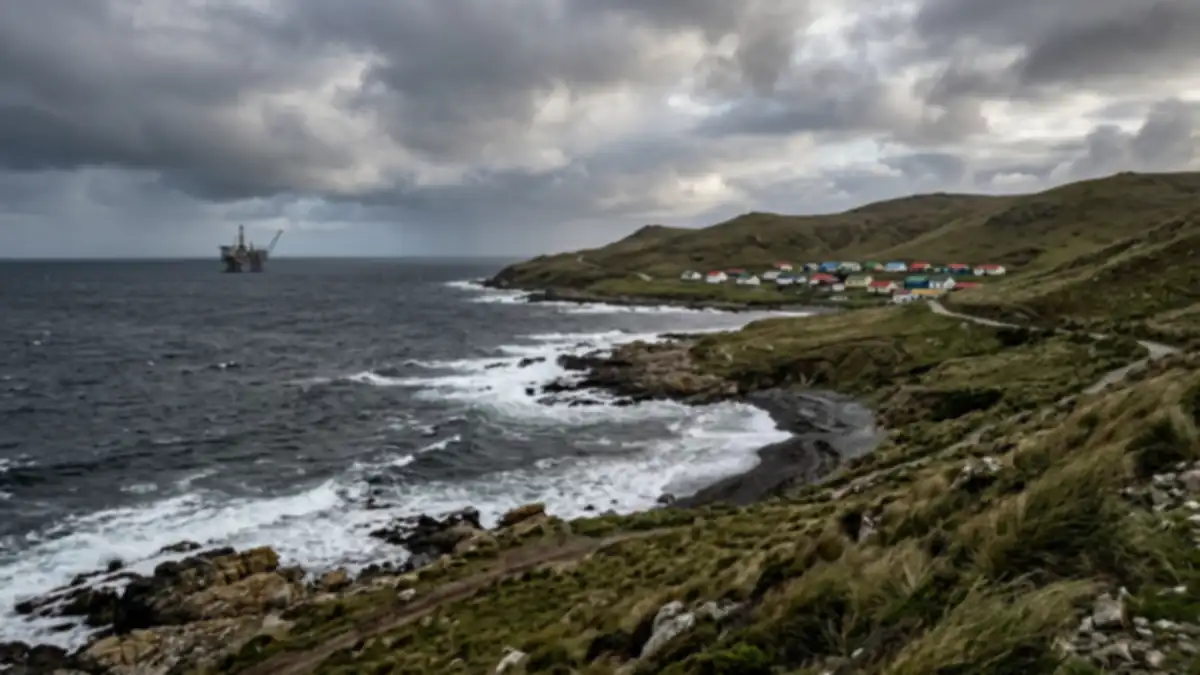
Sea Lion is contentious because the field sits in waters around islands that Britain governs and Argentina claims as the Malvinas. The BBC reports it lies about 130 miles (209km) from the islands. Britain and Argentina fought a 74-day war over the territory in 1982, which killed 255 British military personnel, three islanders and 649 Argentine military personnel.
Navitas holds 65% of the project and Rockhopper, which is listed in London, holds 35%, according to MercoPress. The partners took their final investment decision in December 2025 and expect first oil in the first quarter of 2028. Reuters adds that the US oil services firm Halliburton said last month it would not work on the project.
| Milestone | Date |
|---|---|
| Tribunal rejects Argentina’s request | 28 November 2026 |
| Earliest drilling, per UK assurance | 21 March 2027 |
| Earliest extraction, per UK assurance | March 2028 |
What it means for the UK and what happens next
For UK readers, the ruling removes one obstacle to a project worth potentially huge revenue to a British overseas territory of roughly 3,660 people, but it does not end the legal or diplomatic row. The wider arbitration case, which Argentina filed in September, continues.
Milei’s government said it would move “without delay” to constitute that arbitral tribunal and seek fresh measures there, according to MercoPress. The tribunal itself encouraged both sides to set it up swiftly. The Independent reports that Argentina has also put forward legislation targeting companies involved in exploration off the islands, after US President Donald Trump suggested Washington could revisit its neutral stance on sovereignty.
Investors and energy watchers will also note the timetable. With drilling no earlier than March 2027, any effect on fuel supply is years away, so nothing changes for household bills now. For wider context on energy and diplomacy, see our earlier coverage of the Hormuz tanker attacks and UK petrol prices, and more in our World section.