



























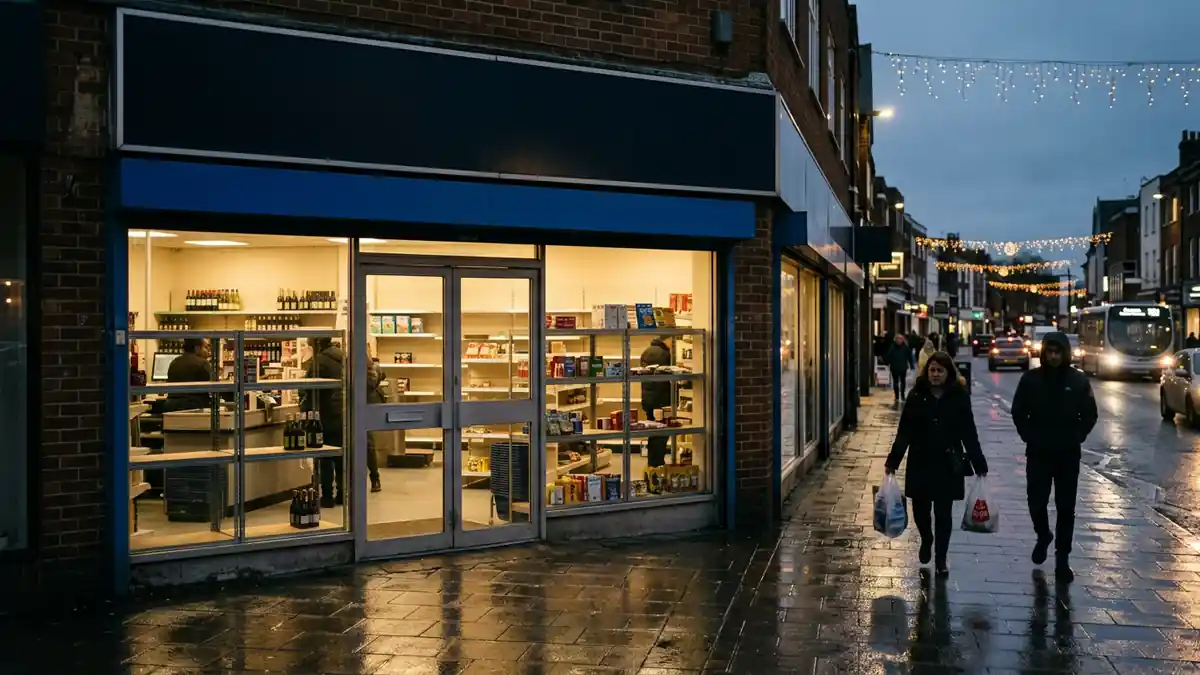
Poundland’s rescue deadline runs out at midnight on Wednesday 25 November, leaving the discount chain’s 600 shops and around 11,000 jobs hanging on whether a buyer can be found in the next 48 hours. A late bid from a German investment firm has revived hopes of a sale, as the retailer’s US owner returned to brief the Business Secretary on Monday.
Key points
- Poundland’s second notice of intention to appoint administrators expires at midnight on Wednesday 25 November 2026, according to the Press Association.
- About 11,000 Poundland jobs and 600 stores in the UK and Ireland are at risk if no rescue deal is agreed.
- German investment firm Zachert Private Equity made a last-minute offer over the weekend of 21 to 22 November, joining three earlier bidders.
- Poundland made an £18.1m profit before interest, tax and certain charges in the year to September 2026, up from a £68m loss a year earlier.
The Poundland rescue deadline has turned into one of the most politically charged retail stories of the year. Owner Gordon Brothers, a US investment firm that specialises in distressed businesses, met Business Secretary Jonathan Reynolds again on Monday 23 November to update him on the sale process, the Press Association reported. The meeting came days after MPs accused the firm of starving the chain of cash.
When is the Poundland rescue deadline?
The deadline is midnight on Wednesday 25 November 2026. Poundland first filed a notice of intention to appoint administrators at the end of October, which gives a company a short legal breathing space from creditors. When that lapsed, it filed a second notice earlier this month, buying a further 10 days to strike a deal. If nothing is agreed, administrators are expected to be appointed, with advisory firm AlixPartners already lined up to step in.
The timing could hardly be worse. A value retailer that cannot stock its shelves in November and December is in serious trouble whatever its annual figures say, Julie Palmer, managing partner at insolvency specialist Begbies Traynor, told the BBC.
Who wants to buy Poundland?
At least four parties have shown an interest in buying the whole business. Zachert Private Equity, based in Germany, is the newest and is regarded as a credible contender, though it is not yet clear how it would fund a deal. It joins Irish firm Martin Property Group, London-based Xyra Holdings and Irish investment company Innovest, about whose financial backing concerns have reportedly been raised.
Gordon Brothers previously rejected a takeover proposal from Martin Property Group, even though Poundland’s management had named it preferred bidder in October. That decision drew calls for answers from Prime Minister Andy Burnham and from Mr Reynolds.
Alongside the whole-company bids, advisers have held talks with other retailers about buying chunks of the estate. Tesco has discussed taking up to 150 stores, and Iceland and Lidl have also been in talks, according to Business Live. Poundstretcher and B&M have previously been linked with shops too.
Why is a profitable chain facing administration?
Poundland’s problem is funding and ownership rather than falling sales. Under boss Barry Williams, the chain moved from a £68m loss to an £18.1m profit before interest, tax and certain accounting charges in the year to September. First-quarter like-for-like sales rose 7%, and Halloween sales were 11.4% higher than last year.
“This isn’t a story about shoppers abandoning Poundland. The tills are busier than they were a year ago,” Ms Palmer said.
The difficulty lies with the owner. Gordon Brothers bought Poundland from Pepco for £1 in 2025 and is also one of its main lenders, owed loans including a £22.5m shareholder loan. As the main creditor, it would be first in line to be repaid in an insolvency, ahead of suppliers. The BBC reported that about £50m of Poundland’s cash had been frozen, with around £21m later released over two weeks.
Gordon Brothers rejects the claim that it is running the business down to profit from a break-up. It says the chain remains “challenged and vulnerable to any potential downturn in future trading” and argues that selling stores to other retailers, who would have to keep staff on, could protect jobs better in the long run.
Background: why it matters for the high street
Poundland is one of the largest discount chains in Britain, trading as Dealz in Ireland. Its shops anchor many town centres, and its collapse would hit thousands of supplier jobs as well as its own staff. On 11 November, Liam Byrne, chair of the Commons business and trade committee, described the owner’s behaviour as “much like a wolf on Wall Street, on the British High Street”, the BBC reported.
The case echoes wider pressure on budget shoppers. London Journal has reported on Waitrose price rises in London and the supermarket Christmas veg price war, both signs of how hard retailers are fighting for value-conscious customers.
| Poundland at a glance | Figure |
|---|---|
| Stores (UK and Ireland) | About 600 |
| Employees | About 11,000 |
| Profit before interest, tax and certain charges, year to September 2026 | £18.1m (from a £68m loss) |
| Price paid by Gordon Brothers in 2025 | £1 |
| Rescue deadline | Midnight, Wednesday 25 November 2026 |
What happens next for Poundland staff and shoppers?
There are two routes from here. A solvent sale would see the chain bought and carry on trading, keeping most stores and jobs. If no deal is struck by midnight on Wednesday, administrators would take control and could sell stores in batches to rival retailers, with closures likely where no buyer emerges.
For shoppers, Poundland stores are still trading. The bigger question is stock: the chain needs cash to fill its shelves for Christmas, and staff, suppliers and customers will learn within days whether it goes into the festive season under a new owner or in administration. More coverage is on our Business page.