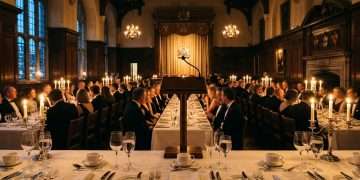















The prime minister will use the Lord Mayor’s Banquet on Monday evening to deliver his sharpest verdict yet on Britain’s departure from the EU, days before a summit at which he hopes to sign new agreements on food, emissions trading and youth mobility.
Andy Burnham is preparing to tell an audience in the City of London that the post-Brexit settlement has failed to deliver what voters were promised, setting the tone for a week that could define his early months in Downing Street.
According to advance extracts released by his office and reported by Reuters, he will liken the debate to “the emperor’s new clothes”, adding: “The Brexit we were given has not worked. We have lost more than we gained.”
The speech, billed as a major foreign policy address, comes ahead of a UK-EU summit in Brussels on Friday 20 November, where he is due to meet European Commission president Ursula von der Leyen and European Council president António Costa.
Three tests for a deal
Mr Burnham is expected to set out three conditions any agreement must meet. First, it must stay within Labour’s 2024 manifesto red lines: no return to the single market, the customs union or freedom of movement. Second, it must improve on the existing arrangements and bring them closer to what he believes people thought they were voting for in 2016. Third, it must pass what he calls the “Makerfield test”, named after his own constituency, by delivering tangible improvements to everyday life, the Standard reported.
He is also expected to describe the approach as “a win-win” that is “not adversarial”, and to declare that “Britain is back as a positive player on the world stage”.
The package on the table at Friday’s summit centres on three areas. The two sides have already agreed a draft text to remove post-Brexit checks on food and agricultural exports, and similar drafts on emissions trading and a youth travel and work scheme have been circulated to EU member states, according to the BBC. The government says the food deal alone would eventually bring £5.1bn a year in benefits, while Mr Burnham has claimed the wider set of agreements could add 0.4 per cent to GDP.
Sticking points and political pressure
Talks are not finished. The i Paper reported that the deal was said to be “95 per cent there”, with the remaining disputes centred on an EU request for lower tuition fees for European students at UK universities and Britain’s wish to take part in the EU’s Made in Europe industrial scheme. Mr Burnham has signalled he is prepared to give ground on both.
The shift in tone is a clear break from his predecessor, Sir Keir Starmer, who struck the first reset deal in May 2025. Mr Burnham has previously said all long-term options, including rejoining, are on the table, though he told Welsh Labour’s conference on Saturday that he would respect both the manifesto red lines and the referendum result, and that voters would ultimately be “the boss” of any bigger change.
Opponents have been quick to respond. Conservative deputy leader Alex Burghart accused the prime minister of “reopening a debate the country settled long ago”, while former home secretary Dame Priti Patel said his “obsession with the EU risks dragging Britain backwards”. Reform UK argues that freedom from EU rules is one of Brexit’s key benefits.
From the other direction, the Liberal Democrats have dismissed the draft deal as “a patch, not a fix” and want a return to the single market and a customs union, while Green Party leader Zack Polanski has accused Mr Burnham of signalling boldly and then pulling back.
There are tensions inside government too. The i Paper reported that some Cabinet ministers, including Home Secretary Shabana Mahmood, are wary of anything touching free movement, and that some Labour MPs in Leave-voting seats have raised concerns with the Cabinet Office.
What it means for London
The Lord Mayor’s Banquet is one of the City’s set-piece occasions, and the financial and business community gathered there has a direct stake in how trade frictions with Britain’s largest trading partner are handled.
The capital’s political leadership is also part of the story. London Mayor Lord Khan has led calls within Labour for the UK to rejoin the EU, putting City Hall further ahead on the issue than Downing Street.
Two of the summit’s live issues bear directly on the capital: a youth mobility scheme that would make it easier for young people to live and work in each other’s countries, and any change to fees charged to EU students, which would affect London’s large university sector.
What happens next
Mr Burnham speaks on Monday evening, with negotiators working through the week ahead of Friday’s summit in Brussels.
The bigger question is what comes after. Mr Burnham has said the Cabinet will decide “what, if anything, comes next” once the summit is over, and No 10 has declined to commit to setting out longer-term options for the relationship before the end of the year.