

















Iran has fired drones at a US radar site in Bahrain for the second time in three days and says the Strait of Hormuz remains closed, a fresh setback for oil markets just as British households face a steep rise in energy bills in January.
Iran’s Islamic Revolutionary Guard Corps (IRGC) said on Sunday that it had launched six drones at a US air defence radar facility at the Riffa air base in Bahrain. Bahrain’s military said its air defences intercepted and destroyed the attack before it could reach its target, according to the BBC.
Sirens sounded across the kingdom and the interior ministry told residents to move to the nearest safe location. Bahrain’s foreign ministry said it “condemns in the strongest terms the continued brutal Iranian attacks on its territory and holds Iran fully responsible for their consequences”.
It was the second Iranian attempt to hit Bahrain in three days. On Friday, Iran fired drones at the Gulf state for the first time since September; the US military said both were shot down and caused no injuries or damage. Saudi Arabia’s foreign ministry has since condemned the latest attack and declared its full solidarity with Manama.
A stand-off over the strait
The strikes come amid a tense stand-off between Washington and Tehran over the Strait of Hormuz, the narrow channel through which about a fifth of the world’s oil and gas normally passes. Shipping has been restricted since the war began in late February, when the US and Israel launched strikes on Iran.
In a statement carried by Iranian state media, the IRGC said: “The Strait of Hormuz is closed, and any aggression by the American enemy will be met with an even harsher and more forceful response.” Tehran describes the Bahrain operation as a reply to what it called the “blatant aggression of the U.S. military”, following US strikes earlier in the week on Iran’s Qeshm Island.
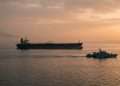
Iran’s Revolutionary Guard navy also said two oil tankers had struck mines and caught fire south of the strait, claiming the ships had switched off their tracking systems and were using an unauthorised route. Those claims have not been independently confirmed.
Diplomacy appears stalled. A preliminary deal reached in June to end the war and reopen the strait collapsed within weeks. This week Donald Trump said the US was no longer interested in a deal and told Vice-President JD Vance to concentrate on domestic politics, although Reuters reported over the weekend that the president was considering holding off on fresh attacks unless provoked.
Iran’s parliamentary speaker, Mohammad Bagher Ghalibaf, said on Sunday that a route to ending the conflict remained open if the US accepted Iran’s “logical conditions”, but warned that Tehran would not stay in a state of “neither war nor peace”, Bloomberg reported.
What it means for UK readers
For households in London and across Britain, the conflict is felt most sharply at the petrol pump and in the energy bill. Brent crude, the global oil benchmark, traded at about $72 a barrel before the war and peaked at $126 at the end of April. It had eased to its lowest level since late August this week, after Mr Trump said the war was “effectively over”, and stood at about $95 on Friday, the Guardian reported. The International Energy Agency said global oil supply returned to surplus in October for the first time since the fighting began.
Renewed attacks in the Gulf threaten that fragile recovery. Diesel is still averaging around 197p a litre, close to October’s record of £2, while petrol has dropped to about 168p, according to the AA. Its fuel price spokesperson, Luke Bosdet, said London and the south-east stood out for having none of the cheaper forecourts found in northern England, Wales and Scotland.
Home energy is the bigger worry. Forecasts from British Gas, EDF and E.ON suggest the typical household bill could rise by more than a quarter in January, roughly £460 a year, with Europe’s winter gas stores at their lowest since records began in 2011, the BBC reported.
What happens next
Traders will be watching how oil prices react as markets reopen this week, and whether the latest Iranian claims about tanker strikes are confirmed. Diplomatically, attention turns to Shenzhen, where the Kremlin says Vladimir Putin, Xi Jinping and Donald Trump will hold a three-way meeting on 19 November on the sidelines of the Asia-Pacific Economic Cooperation summit.
For now, both Washington and Tehran say the door to a settlement is not fully shut. But with drones in the air over Bahrain and mines reported in the strait, British motorists and bill payers may have to wait some time yet for lasting relief.