

















A swallowable “sponge on a string” that can be used in a GP surgery in a few minutes could become a routine way to check people with long-term heartburn for early warning signs of oesophageal cancer, under draft guidance for the NHS in England published on Monday.
The National Institute for Health and Care Excellence (NICE) has proposed that the capsule sponge test be offered as an option both for finding Barrett’s oesophagus in people at higher risk, such as those with persistent acid reflux, and for keeping watch on patients already diagnosed with the condition. If confirmed, the move would take a test that has so far been available mainly through pilots and clinical trials and make it part of standard care, according to Cancer Research UK, which funded much of the research behind it.
The recommendation is not final. NICE’s project page shows the draft guidance is open for comment until 7 December, with a second committee meeting pencilled in for 16 December and final guidance expected on 24 February 2027.
How the capsule sponge test works
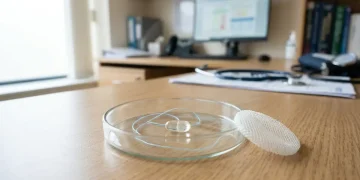
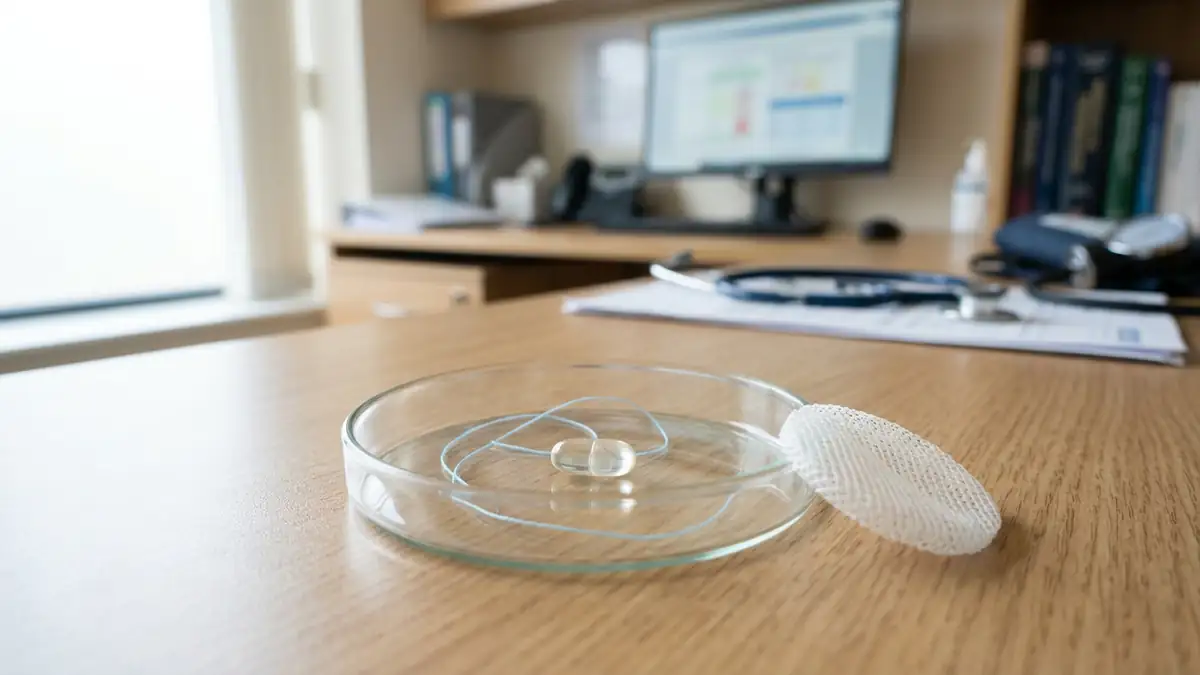
The patient swallows a small coated capsule tied to a thread. Once it reaches the stomach the coating dissolves and a compressed sponge opens out to roughly the size of a 50p coin. A nurse or doctor then draws it gently back up by the thread, and on the way out the sponge picks up cells from the lining of the gullet.
Those cells go to a laboratory, where they are checked for changes linked to Barrett’s oesophagus or cancer. NICE’s technical description explains that the sample is tested for a protein called Trefoil Factor 3, a marker of precancerous change. Anyone whose result is a concern is then referred on for a conventional endoscopy.
That last step matters. The sponge is not meant to replace the camera altogether, but to act as a filter, sparing many people an invasive hospital procedure and sending on only those who need a closer look.
Why it matters for patients and the NHS
Barrett’s oesophagus develops when repeated exposure to stomach acid alters the cells lining the food pipe. Between one and two adults in every hundred are thought to have it, the BBC reports. Most will never go on to develop cancer, but a small number do, and catching the change early gives doctors the chance to treat it before it becomes dangerous or to diagnose cancer at a stage where treatment is more likely to work.
At present, NICE guidance points doctors towards endoscopy for diagnosing and monitoring the condition. Endoscopy is expensive, can be uncomfortable and usually involves sedation. It also ties up staff: Cancer Research UK notes that an endoscopy needs at least two nurses and a specialist, whereas the sponge can be given by a single GP or nurse. With demand for endoscopy high, some people with Barrett’s are not checked as often as recommended.
The evidence for the test is substantial. The Cancer Research UK-funded BEST3 trial found the sponge, used in primary care, picked up ten times more cases of Barrett’s oesophagus than usual care.
Professor Jonathan Benger, NICE’s chief executive, described the sponge as a “quick and less invasive” way of spotting worrying changes, according to the BBC. Professor Peter Johnson, NHS England’s national clinical director for cancer, said thousands of people had already benefited through NHS pilots and that an easier check could reduce the need for “more complicated endoscopy tests” while freeing up resources to find cancers earlier.
Michelle Mitchell, chief executive of Cancer Research UK, said oesophageal cancer is often diagnosed late and that new ways of detecting it earlier were “essential” to improving survival.
The caveats
NICE is careful not to oversell the test. No diagnostic tool, endoscopy included, catches every case, and the regulator says people who receive a clear sponge result should still be monitored over the long term.
There is also a practical bottleneck further down the line. Taking the sample is fast, but analysing it relies on pathologists, and wider use could leave laboratories struggling to keep up. Cancer Research UK says researchers led by Dr Florian Markowetz at its Cambridge Institute have trained an artificial intelligence model to flag signs of Barrett’s in the samples, and that early results suggest it can cut lab scientists’ workload by more than half without losing accuracy. The tool is now being tested on samples from the ongoing BEST4 trial, which is also examining whether the sponge could underpin a national screening programme for people with persistent heartburn.
Who could be affected
The guidance applies directly to the NHS in England, and Welsh ministers have directed the NHS in Wales to follow NICE recommendations unless told otherwise. Northern Ireland’s Department of Health will review it for local use, while Scotland assesses health technologies through its own process.
For the many people who live with regular heartburn, the message from clinicians remains the same: persistent symptoms are worth raising with a GP. The BBC notes that being overweight, smoking and drinking alcohol all increase the risk of reflux, which over time can damage the lining of the oesophagus.
If the guidance is confirmed in February, the capsule sponge test would mark one of the more significant shifts in how the NHS looks for a cancer that is too often found late. For more on medical research and health policy, see our Health and Science sections.