













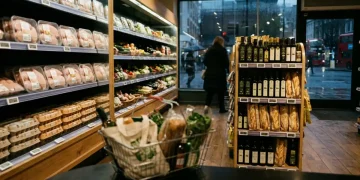



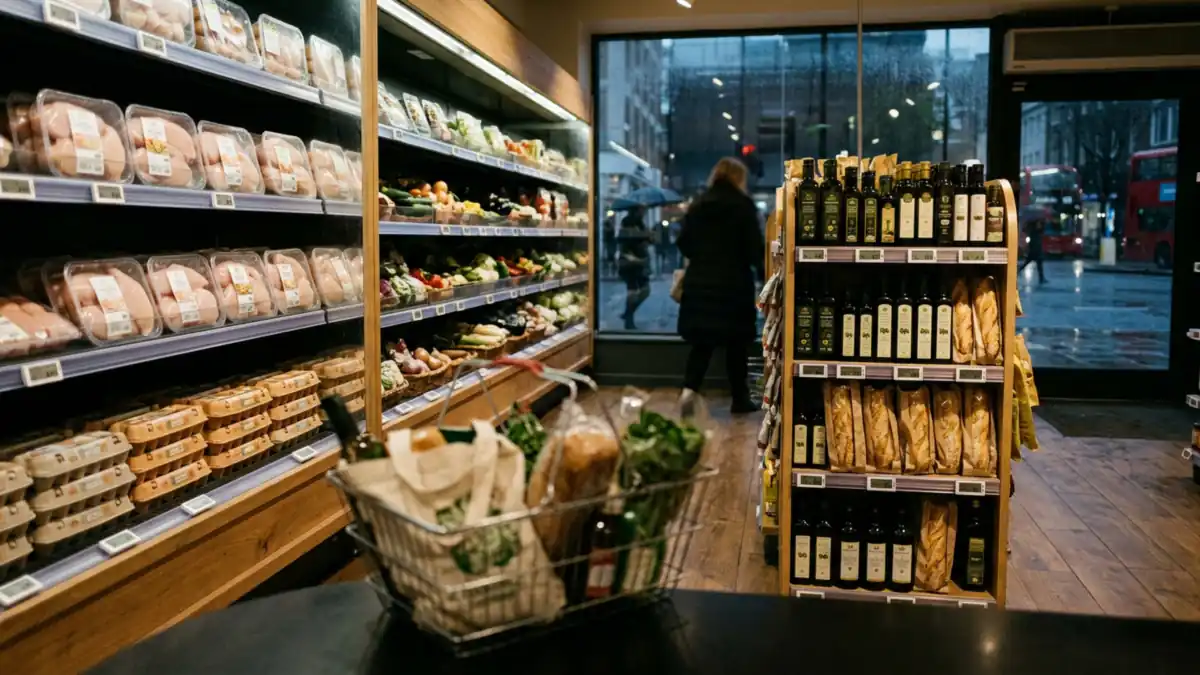
Waitrose has quietly moved a group of its London supermarkets onto higher “convenience” pricing, leaving shoppers in Bloomsbury, Marylebone, King’s Cross and other neighbourhoods paying noticeably more for everyday staples than customers in Canary Wharf or online, at a time when grocery inflation is creeping up again.
The change, first revealed by The Telegraph, affects up to 15 branches across the capital. Stores named in the report include Bloomsbury, Marylebone, Stratford East, Crouch End, King’s Cross, Islington, Clapham Junction and Chelsea’s King’s Road. The supermarket has not confirmed the full list or the exact number of shops involved.
What makes the move unusual is the type of shop concerned. These are full-size supermarkets, large enough to be restricted to six hours of Sunday trading, rather than the small Little Waitrose outlets where a convenience premium is more familiar to customers.
How much more London shoppers are paying
The Telegraph’s price checks at the Bloomsbury branch, in the Grade II-listed Brunswick Centre, found some items costing as much as 13.6 per cent more than at the retailer’s Canary Wharf flagship or on its website. A pack of two Waitrose chicken breast fillets was priced at £6.05, against £5.50 elsewhere, while a four-pack of Heinz baked beans had risen to £3.05 from £2.75.
Other increases were smaller in cash terms but no less noticeable for regular shoppers. Six Essential free-range eggs cost £1.59 rather than £1.40, a 500ml bottle of light olive oil was £6.69 instead of £5.95, and two part-baked baguettes had gone up from £1.50 to £1.65. Across a basket of 14 identical products, the Bloomsbury bill came to £30.68, compared with £28.60 for home delivery from Waitrose.com. Eight of the 14 lines, including flour and chopped tomatoes, were unchanged.
According to a staff member quoted by the newspaper, the new prices were pushed to the stores’ digital shelf labels from head office on Wednesday 11 November, and complaints followed within days. One regular customer, Jon Robertson, described the change as “pretty brutal… just as the cold weather kicks in”, and said he would stay away until prices improved.
What Waitrose says
Waitrose argues that the overwhelming majority of its customers will see no change. In a statement repeated to The Sun, a spokesperson said the retailer was “updating the prices in a small number of shops to reflect their higher running costs”, while at the same time cutting prices on around 1,000 popular items in its convenience shops to bring them into line with its supermarkets.
The timing is awkward for a business that has spent the autumn talking up value. In September Waitrose said it was investing £20 million to make the weekly shop cheaper, lowering prices by an average of 11 per cent on hundreds of lines, with more than half of the reductions in its Essential own-brand range. Raising prices in some of its busiest London neighbourhoods sits uneasily alongside that message, and the retailer’s refusal to publish a list of affected stores leaves customers to work it out at the shelf edge.
Convenience pricing itself is nothing new. Most large grocers charge more in smaller neighbourhood formats, where rents, staffing and deliveries cost more per item sold. The difference here is that shoppers had little reason to expect it in stores that look and trade like ordinary supermarkets.
Inflation is edging up again
The row comes as the wider grocery market turns less forgiving for households. Figures from Worldpanel by Numerator, reported by The Independent, show supermarket prices running 2.6 per cent higher than a year earlier, up from 2.5 per cent in September. Fraser McKevitt, the firm’s head of retail and consumer insight, warned that shoppers “will be keeping a close eye on prices at the tills this winter” after October’s energy price cap rise.
The same data showed Waitrose nudging its market share up to 4.5 per cent from 4.4 per cent, with sales up 2.2 per cent, so the chain is not short of customers. But it remains the most expensive of the big grocers on standard price comparisons. In The Grocer’s latest weekly basket survey, Waitrose’s shop cost £89.78, 28.8 per cent more than the cheapest basket at Tesco, and 3.9 per cent more than a year earlier, the steepest annual rise among the retailers tracked.
What it means for shoppers in the capital
For Londoners who rely on a local Waitrose, the practical advice is simple: compare. On the Telegraph’s figures, the website and the Canary Wharf store were cheaper on several staples, so customers who can plan ahead may save by ordering online or checking prices in the app before they shop. Waitrose says its rewards and promotions run across all stores, which may soften the impact for loyal customers.
The bigger question is about trust. Pricing transparency has become a sensitive subject for the big grocers, and quietly re-tiering stores without telling customers which ones risks feeding the suspicion that the price on the shelf depends on the postcode. With Christmas approaching and household budgets stretched, Waitrose may find that clearly explaining which branches have changed, and why, costs it less than the backlash. For more on what is happening to the cost of eating in Britain, see our food news coverage and our business section.