













Wolfson History Prize 2026: Sam Wetherell’s Liverpool: A Story of Britain is one of six books competing for the £50,000 award, with the winner due on Tuesday 1 December 2026. If it wins, it will be among only a handful of single-city histories to take the UK’s best-known history writing prize.
Key points
- The Wolfson History Prize winner will be announced on 1 December 2026 and receives £50,000, according to the BBC.
- Six books are in the running, including Sam Wetherell’s Liverpool: A Story of Britain, Richard Holmes’s The Boundless Deep and Sadiah Qureshi’s Vanished.
- Wetherell, a University of York historian, says he is an “outsider” to Liverpool and chose one city to tell a wider story of Britain.
- His book covers the Toxteth riots of 1981, the Militant council’s clash with Margaret Thatcher’s government and the Hillsborough disaster of 1989, which claimed 97 lives.
Who is on the Wolfson History Prize 2026 shortlist?
Six books are on the 2026 shortlist for the Wolfson History Prize, and the BBC reported on 29 November 2026 that the winner will be named on 1 December. Besides Wetherell, the finalists are Richard Holmes, Sadiah Qureshi, Lyndal Roper, Selena Wisnom and Francis Young.
| Author | Book |
|---|---|
| Richard Holmes | The Boundless Deep |
| Sadiah Qureshi | Vanished |
| Lyndal Roper | Summer of Fire and Blood |
| Sam Wetherell | Liverpool: A Story of Britain |
| Selena Wisnom | The Library of Ancient Wisdom |
| Francis Young | Silence of the Gods |
The BBC’s report on the shortlist describes the prize as the most high-profile in history writing. Past winners it names include Simon Schama and Mary Beard, and Antony Beevor’s account of Stalingrad also won, going on to become a best-seller.
What is Liverpool: A Story of Britain about?
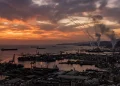
Liverpool: A Story of Britain uses one city to tell the story of modern Britain. It follows the sharp decline of Liverpool’s maritime power in the second half of the twentieth century, and the collapse of suburban manufacturing in the 1970s, which hit women’s employment hardest.
According to the BBC, more than 60% of the female workforce in that sector lost their jobs. The book also covers the Toxteth riots of 1981, the clash between the Militant Tendency city council and Margaret Thatcher’s Conservative government in the mid-1980s, and the Hillsborough disaster, in which 97 Liverpool fans died at an FA Cup semi-final in 1989.
Wetherell, a historian at the University of York, told the BBC he had “long felt that the best way to write about Britain’s history is to tell it through a single space, a single city”. He added that the story can be told through “a series of interconnected interwoven stories”.
Which lesser-known stories does the book tell?
The book gives space to figures who rarely feature in national histories. One is Pastor George Daniels Eckarte, a Nigerian street pastor who ran a home for boys in Toxteth, and who joined a movement, ultimately unsuccessful, to train mixed-race children of black US soldiers and British women as future leaders in post-colonial Africa.
Another strand covers public health figures Howard Seymour and John Ashton, who helped set up the first needle exchanges for drug users. The BBC reports that, despite some of the highest rates of heroin use, Merseyside recorded some of the lowest rates of Aids and HIV deaths in the 1980s.
What does a Wolfson win mean for Liverpool and for readers?
A win would put a regional story in front of a national audience, and Wetherell says the book’s argument is that Liverpool “helps us tell a history of Britain that is suited to our present moment”. For the author, the BBC notes, the £50,000 prize could be life-changing.
The book also challenges a tidy narrative. Tourism now employs about 35,000 people in the city, roughly the number who worked on the docks at their early twentieth-century peak, and the Beatles bring in about £200m a year. Wetherell warns against complacency, saying it would be wrong to assume that the redeveloped waterfront and the service economy have solved the city’s problems. Cost-of-living pressures and skills gaps remain.
The BBC notes that Apple Corps is due to take over the running of the Beatles Story museum in 2027, a sign of how heritage has become part of the economy.
Background: why the Wolfson History Prize matters
The BBC describes the Wolfson as the most high-profile prize in history writing, and says winners such as Simon Schama and Mary Beard are among the best-known historians in the business. A single-city history winning would follow Stalingrad and books about London, Paris and Pompeii.
What happens next
The winner will be announced on Tuesday 1 December 2026. For more coverage, see our Books section, our recent report on the Jilly Cooper plagiarism claims, and our Lifestyle coverage.
Read the BBC’s full report on Liverpool’s bid for the Wolfson Prize for more from Wetherell.