
















Debris from the roof of a tunnel near Farringdon closed both tracks between St Pancras and Blackfriars on Sunday 15 November, cutting direct trains across the capital and to Gatwick and Luton airports while engineers checked the structure.
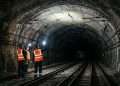
Thameslink services through the heart of London were halted for most of Sunday after pieces of concrete were found on the track inside the Snow Hill Tunnel, the short stretch of line that runs beneath the City between Farringdon and City Thameslink.
The debris was spotted during routine checks early in the morning, according to the operator, and had also damaged the overhead wires that power the trains. National Rail first logged the incident shortly after 8am, describing the tunnel as closed “for safety reasons”. No injuries have been reported.
With both lines blocked, no trains could run through the core section between St Pancras International and Blackfriars, the north-south spine of a network that links Bedford, Luton, Cambridge and Peterborough with Brighton, Gatwick and Kent.
A closure that kept getting longer
Thameslink initially told passengers on X that its Sunday service through the core normally begins at 9am, but that “due to the inspections and repairs required, we are expecting both lines to be blocked until at least 3pm today”, Metro reported.
That estimate did not hold. By early afternoon the expected reopening had been pushed back to at least 6.30pm, as Network Rail engineers examined the rest of the tunnel roof for loose material and repaired the damaged power lines. The line could only reopen once the tunnel had been confirmed safe.
National Rail’s incident page was finally marked as cleared at 00.52 on Monday 16 November, with normal service restored between St Pancras and Blackfriars.
No cause has yet been given. Specialist reports noted that it was too early to say why the concrete came down, and that it had not been established whether the spot lines up with any building work at street level.
How passengers were affected
The knock-on effects stretched well beyond central London. Trains that would normally run from Cambridge to Brighton were turned round at King’s Cross, the Bedford route was cut to two trains an hour into St Pancras, and services that usually pass through London Bridge were diverted between Blackfriars and East Croydon.
Trains to Rainham in Kent ran only between Plumstead and Rainham, while stations on the Sutton and Wimbledon loop, including Tooting, Haydons Road, Wimbledon Chase and Loughborough Junction, had no Thameslink trains at all.
Passengers were told to allow an extra hour for journeys, and at least 90 minutes if they were heading to Gatwick Airport or Luton Airport Parkway, London Now reported. Tickets were accepted on other operators including Great Northern, Greater Anglia, LNER, Avanti West Coast and CrossCountry, as well as on the Elizabeth line between Farringdon and Abbey Wood, the Underground between London terminals, London buses and trams between Wimbledon and Mitcham Junction.
The closure came on an already difficult day for the capital’s transport network. A casualty on the tracks at Euston Square on Sunday afternoon suspended the Circle line and caused severe delays on four other Tube lines, while rail lines through Wimbledon were shut all day for planned engineering work, London Streets reported.
What it means for London readers
For most commuters the immediate disruption is over: the line was declared clear in the early hours of Monday, ahead of the weekday rush. Even so, anyone travelling through Farringdon, City Thameslink or Blackfriars on Monday morning would be wise to check live departures before setting off, in case of lingering delays after such a long closure.
Passengers whose journeys were delayed on Sunday may be entitled to compensation. Operators advised travellers to keep their tickets and a note of the journey they made, as both are needed to support a claim.
The wider question is about the condition of the tunnel itself. The Snow Hill Tunnel carries one of the busiest cross-London rail routes, and a roof failure of this kind, even one that injured nobody, is likely to prompt closer scrutiny of how such structures are inspected.
What happens next
Network Rail has yet to publish an explanation of what caused the concrete to fall, or whether further repairs will be needed that could require additional closures. Any follow-up work, and any finding on whether nearby construction played a part, will be closely watched by passengers who rely on the route to cross the capital. London Journal will update readers as more information becomes available.