




















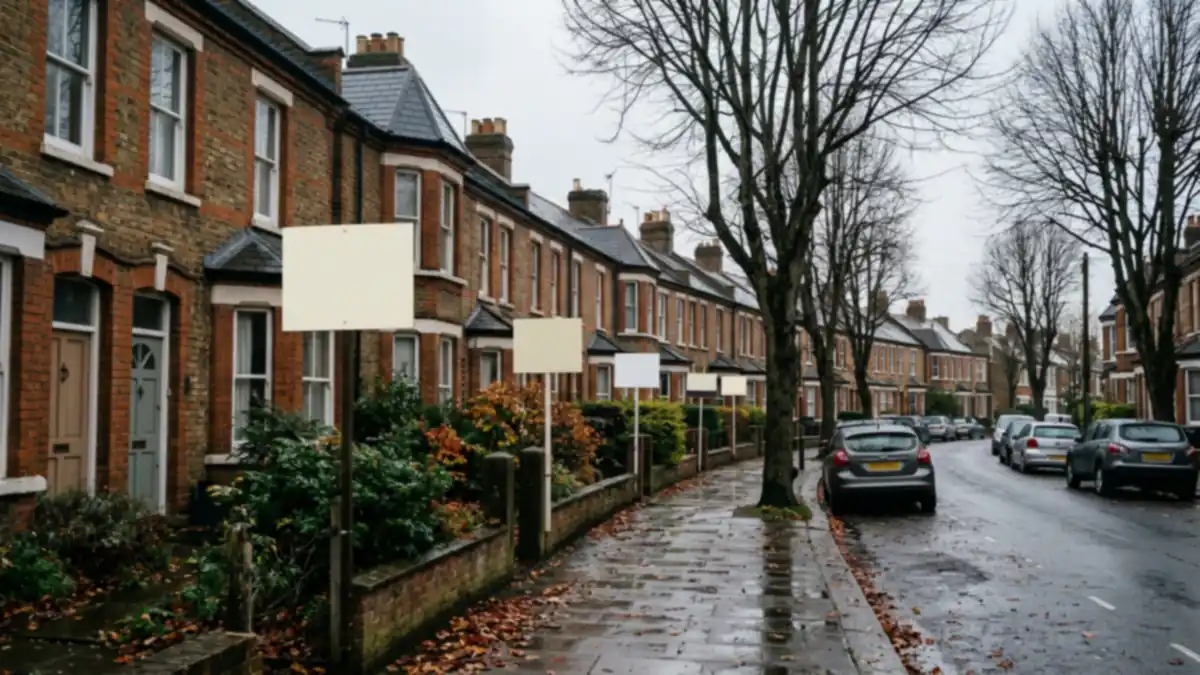
Comment: Another month, another headline about house prices falling. Britain should resist the urge to panic. A gentle correction in an overpriced market is not a crisis, and ministers must not try to pump it back up.
This is an opinion column, and it starts from an unfashionable premise: for millions of people who do not yet own a home, a cheaper housing market is good news, not bad.
The latest figures are certainly gloomy on their face. The average UK house price dropped by 1.8% in November to an average of £364,270, according to Rightmove data reported by City AM. Sellers always trim prices as Christmas approaches, but the ten-year average for a November fall is 1.1%, so this year’s drop is noticeably steeper. Prices now sit 0.2% below where they were a year ago, and the portal says 2026 is on course to end lower than December 2025.
Why prices are slipping
The cause is not mysterious. The average two-year fixed mortgage rate stands at 5.51%, against 4.25% before the Iran war began. That jump has pushed buyers to the sidelines: Rightmove reports new-buyer demand down 8% on a year ago and agreed sales down 7%, even though the number of homes for sale is the highest since 2014.
Behind the mortgage rates sits the Bank of England. Its Monetary Policy Committee voted 8–1 this month to raise Bank Rate to 4%, with one member wanting a larger rise, the Bank’s November Monetary Policy Report shows. Inflation reached 3.5% in September and the Bank expects it to climb to around 5% by the middle of next year as energy costs feed through. In other words, borrowing is dear because prices across the economy are rising, and the Bank has decided it will not let that slide.
A correction, not a collapse
It helps to keep the numbers in proportion. A 0.2% annual fall in prices is a stall, not a crash. The economy as a whole is growing: output rose 0.7% in the third quarter, the fastest pace in two and a half years, Reuters reported last week. This is not a housing market seizing up because people are losing their jobs en masse. It is a market adjusting to the end of cheap money.
That adjustment is overdue. For more than a decade, ultra-low interest rates inflated the price of homes far faster than wages, turning a basic need into a speculative asset and locking a generation out of ownership. If higher rates mean prices drift down while incomes keep rising, the gap between what homes cost and what people earn narrows. That is what affordability looks like in practice.
The pain is concentrated, and that is worth noticing too. London and the south of England are being hit hardest, City AM reports, because higher values and bigger stamp duty bills magnify the effect of every rate rise. Research from Savills suggests prices in the capital will recover more slowly than in any other English region, gaining only 8.1% over the five years to 2031. For Londoners priced out for years, a slower capital market is hardly a tragedy.
What ministers should not do
The danger now is political. Every period of falling prices brings calls for the Treasury to “rescue” the market with stamp duty holidays, new equity loans or other demand-side sweeteners. They should be resisted. Schemes that hand buyers more money to spend on a fixed supply of homes mostly end up in higher prices, cancelling out the very affordability gains a correction offers.
It would also be self-defeating at a time of rising inflation. The Bank is raising rates precisely to cool demand. A government that pumps housing demand back up would be working against its own central bank, and could simply invite further rate rises that hurt every mortgage holder, not just new buyers.
Instead, ministers should use the breathing space to do the dull things that actually help: speed up planning, back social and affordable building, and protect existing borrowers who face sharp increases when their fixed deals end. Help for people struggling with repayments is a legitimate use of policy. Propping up prices is not.
Buyers have more power than they think
Colleen Babcock of Rightmove told City AM that significant falls in fixed mortgage rates look unlikely soon, and that buyers should decide on their priorities. That is sensible advice, and it cuts both ways. With more homes on the market than at any time since 2014, buyers who can afford today’s rates have more choice and more bargaining power than they have had in years.
Tom Bill of Knight Frank put it neatly: next year’s housing market may depend more on what happens in Washington than in Westminster, given the unresolved conflict in the Middle East. Westminster cannot control that. What it can control is the temptation to treat every dip in prices as an emergency. A Britain where homes cost a little less, and where young people can save towards one without waiting until their forties, would be a healthier place. The government should let the correction run.
For more on the economy behind these figures, see our business coverage and the latest from the property market.