












Britain and the European Union are expected to sign a long-awaited food and farming agreement in Brussels on Friday, with ministers promising lower costs for supermarkets and, they hope, cheaper shopping baskets. But the benefits will take time to arrive, and the deal comes with trade-offs that farmers, peers and food businesses are still weighing.
Prime Minister Andy Burnham is due to sign the sanitary and phytosanitary (SPS) agreement at a UK-EU summit on 20 November. It is designed to remove most of the veterinary checks, health certificates and border paperwork that have applied to meat, dairy, fish and plants crossing the Channel since Brexit. The wider political context of the summit is covered in our report on Burnham’s verdict that Brexit “has not worked”; here we look at what it means for food.
What the UK-EU food deal changes
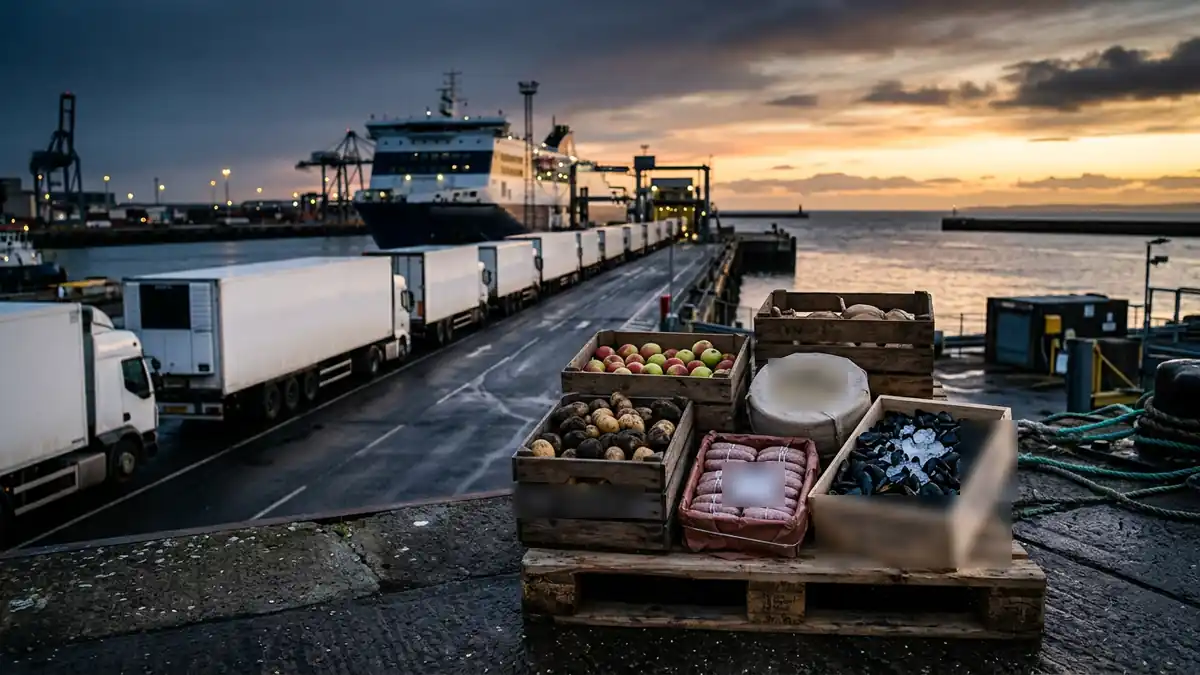
For exporters, the change could be dramatic. As the BBC’s economics editor Faisal Islam reports, every lorry of food bound for the EU currently needs hundreds of pages of forms and checks by vets, and some products, including certain sausages and shellfish, have been shut out altogether. Shipments have been rejected over the colour of ink on a form or a wrong Latin name for cooked meats. Marks & Spencer, which still sends ready meals to its shops in Ireland, has spent millions coping with the rules and cited them when it closed 11 French stores in 2021.
The government says the agreement could be worth around £5bn a year to the economy, and that the full package signed on Friday would add 0.4 per cent to GDP. EU relations minister Hamish Falconer also told the BBC that the reset could mean scrapping checks on goods moving from Great Britain to Northern Ireland, along with the separate “Not for EU” labels that have appeared on supermarket packs.
Small firms have been hit hardest. A Defra-commissioned survey of 600 small and medium-sized food and drink manufacturers, published by the government on 13 November, found that 55 per cent of those exporting to the EU, and 47 per cent of importers, reported lower profits after the new rules arrived in 2021. Some 58 per cent said a deal could help them increase, resume or start exporting within a year.
Will food prices actually fall?
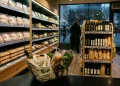
This is where ministers have been careful. Speaking at an M&S food court in central London, Mr Falconer said lower import costs “will mean less cost for supermarkets, and I hope that less cost then turns into cheaper produce on the shelves”. Environment Secretary Angela Eagle told The Guardian the savings should put “downward pressure on food prices”, but would not confirm that the deal would lower the cost of food.
That caution is sensible. Border costs are only one part of what shoppers pay; energy, wages, packaging and global commodity prices matter just as much. Removing friction should help keep imported fresh produce, cheese and meat flowing more cheaply, but whether retailers pass savings on depends on competition in the aisles. It is also not immediate: according to the Guardian, the deal is not expected to be implemented until the first quarter of 2028, later than the mid-2027 target originally set.
The trade-offs: rules, pesticides and crisps
In return for easier trade, the UK will follow EU food safety rules as they evolve, a principle known as dynamic alignment. Mr Falconer acknowledged Britain would have a “voice in the room” but no vote, and that an exit clause was likely in case a future government reversed course. Critics argue that turns the UK into a rule-taker.
Peers have raised sharper concerns. The House of Lords European Affairs Committee, as reported by The Grocer, urged ministers to publish assessments of the cost to industry, including the effect on farm incomes of aligning with EU pesticide rules. The committee heard that the SPS agreement alone might generate at least 780 pieces of in-scope EU law a year. Its chair, Lord Stirrup, warned that such rules “can affect everyday matters, from food standards and consumer prices to business costs and household budgets”. The Fresh Produce Consortium has warned that importers of fruit and vegetables from outside the EU could face a combined bill of £300m a year.
Farmers are cautiously supportive. National Farmers’ Union president Tom Bradshaw welcomed fewer inspections but called the deal “a moment of opportunity and risk”, noting that food exports to the EU have fallen by more than a third since 2019. He hopes for compromises on pesticides and gene-edited crops. Ms Eagle told the Guardian that the EU did not want to be seen wasting food, amid fears that British potatoes treated with pesticides banned in the bloc could be caught out.
And then there are the crisps. Amid online claims that EU rules on flavourings could threaten some favourites, Mr Falconer told the BBC that leading brands had already adapted their recipes, adding: “I would want to reassure people, particularly smoky bacon fans, it’s okay.”
What happens next
If the ink dries on Friday, the hard work begins: legislation, transition rules and guidance for thousands of businesses. For shoppers, the honest message is that the UK-EU food deal is a long-term bet on lower costs rather than an instant price cut. Its success will be judged in the aisles, not at the summit. Follow the latest in our food news section.