






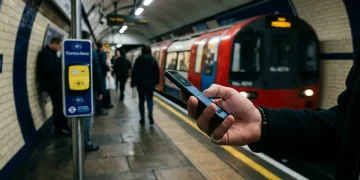












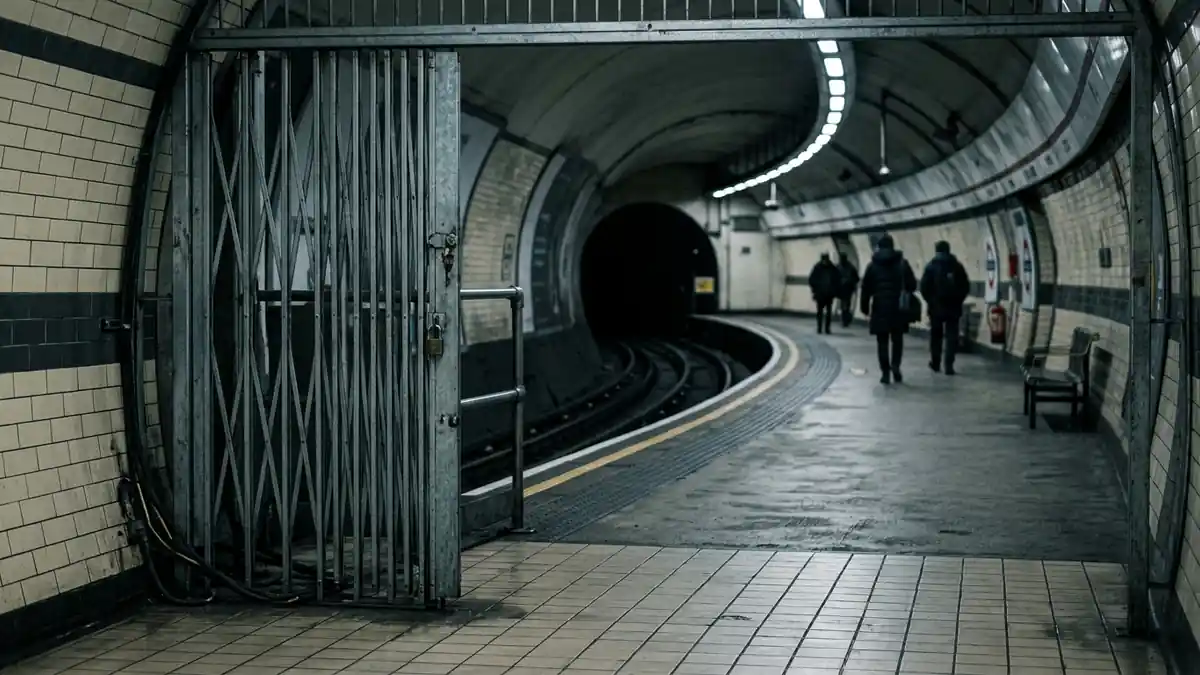
The tube strike dates have been confirmed and the first walkout starts at noon on Thursday 26 November 2026, when RMT drivers stop work for 24 hours. Transport for London says the Circle and Piccadilly lines will not run at all on Thursday, the Waterloo & City line shuts at midday and no Tube trains are expected after 9pm, with seven more strikes to follow before the end of February.
Key points
- RMT Tube drivers are on strike from 12:00 on Thursday 26 November 2026 until 11:59 on Friday 27 November 2026.
- Transport for London expects no Circle or Piccadilly line service all day on 26 November, no Waterloo & City line from midday and no Tube service after 21:00.
- The Elizabeth line, DLR, London Overground, buses and trams are running, but TfL warns they will be busier than normal.
- Seven further 24-hour strikes are planned on 17 and 19 December 2026, 4 and 6 January 2027, and 17, 23 and 25 February 2027.
Which Tube lines are affected by the strike today?
Every Tube line is affected, but the Circle and Piccadilly lines are expected to be closed for the whole of Thursday 26 November, according to Transport for London’s strike guidance. A normal service was planned until about 10am, with trains thinning out until the walkout begins at midday.
From noon most lines are expected to keep running, though with gaps in the timetable and longer waits on platforms. The Waterloo & City line, the short shuttle between Waterloo and Bank used heavily by City workers, stops at midday. After 9pm TfL expects no Tube service anywhere on the network, hitting evening commuters and West End theatregoers.
The Piccadilly line closure reaches well beyond Zone 1, cutting the Tube link to Heathrow and King’s Cross St Pancras. Passengers will need buses, the Elizabeth line or national rail instead.
What happens on Friday 27 November?
Friday will start late and remain disrupted until the evening. TfL says trains will begin from around 7am rather than the usual early start, with disruption across all lines until midday while the strike is still in force, and no Circle, Piccadilly or Waterloo & City trains in that period.
The strike formally ends at 11:59, but the network takes time to recover as drivers and trains are moved back into position. TfL expects a normal service from around 6pm on Friday.
Full list of Tube strike dates
There are eight Tube strike dates in total, each running for 24 hours from midday. The schedule below is taken from TfL’s published notice; disruption is expected before and after each window.
| Strike starts | Strike ends |
|---|---|
| 12:00 Thursday 26 November 2026 | 11:59 Friday 27 November 2026 |
| 12:00 Thursday 17 December 2026 | 11:59 Friday 18 December 2026 |
| 12:00 Saturday 19 December 2026 | 11:59 Sunday 20 December 2026 |
| 12:00 Monday 4 January 2027 | 11:59 Tuesday 5 January 2027 |
| 12:00 Wednesday 6 January 2027 | 11:59 Thursday 7 January 2027 |
| 12:00 Wednesday 17 February 2027 | 11:59 Thursday 18 February 2027 |
| 12:00 Tuesday 23 February 2027 | 11:59 Wednesday 24 February 2027 |
| 12:00 Thursday 25 February 2027 | 11:59 Friday 26 February 2027 |
The two December walkouts fall across four of the busiest shopping and hospitality days before Christmas, a point businesses have raised with alarm, the Guardian reported.
Why are Tube drivers striking over a four-day week?
The dispute is over London Underground’s plan to offer drivers a voluntary four-day working week, which the RMT says would bring longer, less predictable shifts and strip away long-standing protections. Last-ditch talks at the conciliation service Acas on Tuesday 24 November ended without agreement.
London Underground has since added an option for drivers to stay on a five-day pattern with a guarantee that they remain at their current depot, though those drivers would accept the same new terms as the four-day group. TfL says the rosters have been checked with industry-standard fatigue tools, that pay remains based on a 35-hour week, and that drivers on either pattern will spend less time at work each year.
Nick Dent, director of customer operations for London Underground, said the strike was “disappointing” and added: “We continue to believe that the majority of the concerns from the RMT have now been resolved and we urge the RMT to put this proposal to their members.”
Eddie Dempsey, general secretary of the RMT, rejected that account. “There is nothing voluntary about a scheme that forces drivers to give up existing protections whether they work four days or five and threatens those who refuse with displacement from their depots,” he said.
Background: a split between the two drivers’ unions
The row is unusual because the other drivers’ union, Aslef, has accepted the four-day week proposal, so its members are expected to work normally. That is why TfL can keep most lines open during the strike. On Thursday the RMT published a survey of more than 700 frontline Underground staff in which two in three said Mayor Sadiq Khan should step in to resolve the dispute, piling pressure on City Hall ahead of the 2028 mayoral race, in which the Conservatives have already picked James Cleverly as their candidate.
What the Tube strike means for you
For most Londoners the practical advice is to check before travelling and build in extra time. TfL recommends the TfL Go app and its live status page, which update throughout the strike.
- Use unaffected services: the Elizabeth line, DLR, London Overground, buses and trams are all running, though they will be busier and roads more congested.
- Heathrow travellers: with no Piccadilly line on Thursday, the Elizabeth line and Heathrow Express are the main rail options.
- Cycle short hops: Santander Cycles remain available across central London.
- Plan ahead for December: if you are booking Christmas parties, shows or shopping trips around 17 to 20 December, check the strike dates before you commit.
No further talks were expected before Thursday’s walkout, although the RMT says it has written to TfL to confirm it remains available for negotiations. Follow the latest from the capital, including our coverage of the TfL Oyster photocard data breach, on the London Journal London news page.