


























Mulberry’s half-year results, published on 19 November 2026, show the British leather goods brand’s turnaround gathering pace, with revenue up 18% to £63.7m in the six months to 26 September. An oversized slouchy shoulder bag, the XL Delilah, has become a bestseller the company admits it did not see coming.
The British label, best known for the Bayswater and Lily bags, reported a 15% rise in like-for-like retail and digital revenue, with growth in every region. Its gross margin climbed to 70.2%, and its adjusted loss before interest, tax, depreciation and amortisation narrowed sharply to £500,000 from £4.6m a year earlier.
Chief executive Andrea Baldo, who previously helped drive the early success of the Danish label Ganni, told the trade title WWD that his “Back to the Mulberry Spirit” strategy was working. “After 18 months, we are delivering what we have promised,” he said. “Still a lot to do, but clearly the changes that we have implemented are delivering.”
Mulberry results: the key numbers
Beyond the headline sales rise, the figures point to a business spending more carefully. Operating expenses rose 12% to £48m, slower than revenue, while the reported operating loss narrowed 41% to £2.9m. The underlying loss before tax improved 24% to £5.8m.
The reported loss before tax looks far worse, widening to £33.4m from £7.1m. But that is largely an accounting effect: it includes a £27.6m non-cash fair-value charge linked to the conversion feature of Mulberry’s convertible loan notes, which the company said mainly reflected the rise in its own share price and was not expected to have a later cash impact.
Wholesale revenue jumped 52% and now makes up 17% of the business, up from 14% a year earlier. Retail and digital sales rose 28% in the US, 23% in Europe and 10% in the UK. US digital revenue climbed 35%, helped by the launch on Bloomingdale’s Marketplace, and Mulberry said new US customers were up 22.9% year on year. Wholesale growth was especially strong in the Nordic countries, where Baldo began building the brand’s profile more than a year ago, including an early collaboration during Copenhagen Fashion Week.
What is the Mulberry XL Delilah bag?
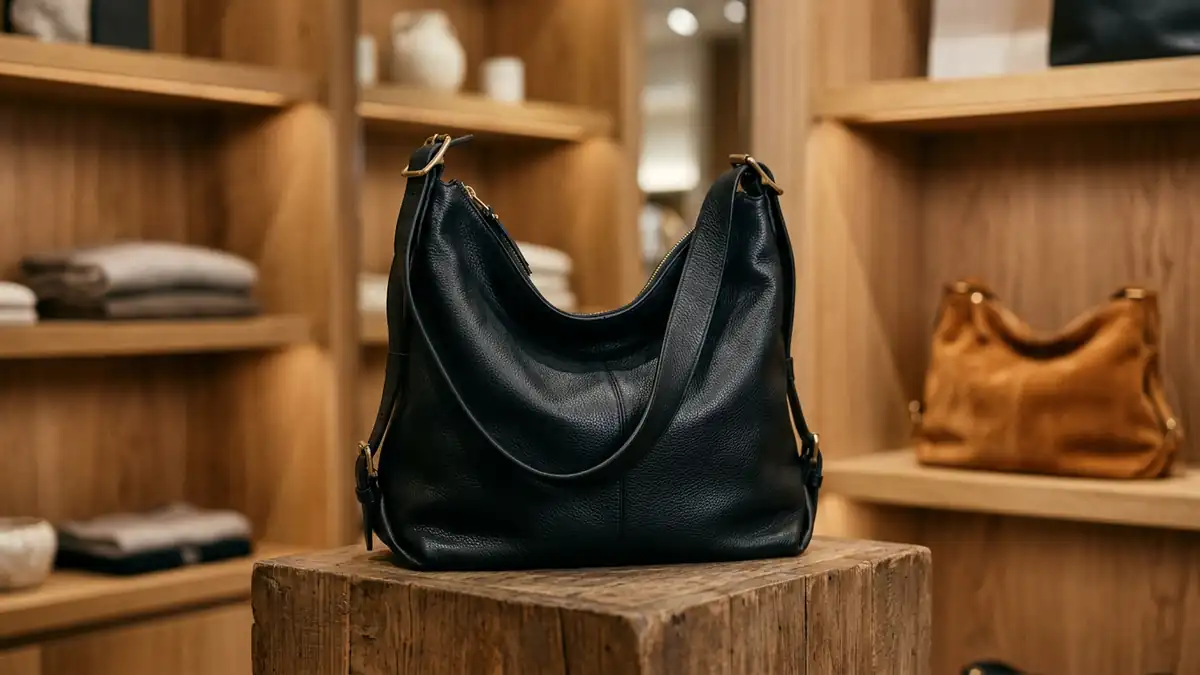
The surprise star of the period is the XL Delilah, an oversized, slouchy shoulder bag in black soft cow leather or brown suede that retails for £1,595. “We were caught off guard,” Baldo said, citing both the price point and continued strong demand for larger, softer, more practical bags.
Demand outstripped expectations, so Mulberry has sped up replenishment using materials set aside for agile production and its own factories. It now expects the bag to be back in stock before Christmas. Baldo describes the approach as “test and scale”, arguing it is hard to know in advance which designs will take off.
The Delilah sits alongside newer styles including the Stevie, Raffia, Crochet and Darley Camera Bag, and the long-running Bayswater and Lily.
Christopher Kane and the London Fashion Week return
The other highlight was Mulberry’s return to the London Fashion Week schedule with designer Christopher Kane, which Baldo said had a “huge impact” on online searches and social media engagement. He sees the partnership as a “halo” for the wider brand, with success measured in store traffic, conversion and like-for-like sales. The new Rocker bag, he said, was Mulberry’s best-performing bag in London during a store takeover week in Covent Garden.
It is a telling moment for British fashion. Mulberry’s progress lands days after Hugo Boss changed its chief executive under pressure from Frasers Group, a reminder that heritage alone no longer protects a premium label.
What it means for shoppers and the high street
For customers, the most visible change is likely to be fewer discounts. Mulberry said it will focus on full-price sales and disciplined trading in the second half rather than chasing volume through promotions, a notable stance with Black Friday on 27 November. Anyone hoping to buy a Delilah in the sales may be disappointed; the better bet is watching for the restock before Christmas.
For the UK industry, a recovering Mulberry matters beyond its own shareholders. Mulberry still runs its own factories, which it is using to restock bestsellers faster, and Baldo said he wants to prioritise growth in the UK and in markets where demand is already responding, while keeping Asia “on our radar”.
What happens next for Mulberry
Chief financial officer Billy O’Connor said the company was in line with board expectations and “cautiously optimistic” about festive trading, describing the turnaround as “a marathon, not a sprint”. Mulberry’s medium-term targets remain annual revenue above £200m and a 15% adjusted operating margin.
“The golden quarter is important, but we are extremely focused on delivering long-term value for our shareholders,” Baldo said. The next test comes with the Christmas trading update in the new year. For more on the business of style, see our Fashion section.