























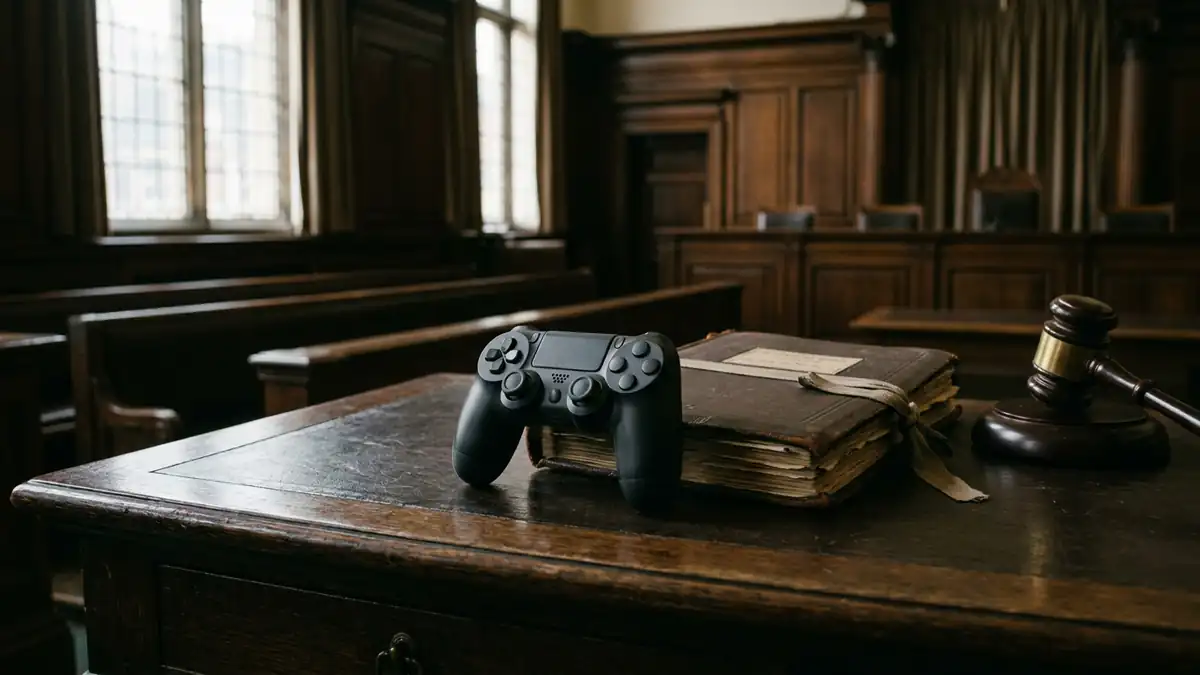
The PlayStation class action against Sony has failed. On 17 November 2026 the Competition Appeal Tribunal in London threw out the roughly £2 billion claim brought for about 12.2 million UK PlayStation users, meaning nobody who bought digital games or add-ons will receive a payout unless the case is revived on appeal.
The claim, led by consumer campaigner Alex Neill, argued that Sony had locked digital buyers into its own PlayStation Store and overcharged them as a result. The tribunal disagreed on every count, dismissing the case “in its entirety”, according to its official summary of the judgment.
What was the PlayStation class action about?
The case was filed in August 2022 and won permission to proceed as a collective action the following year. Its central complaint was simple. If you buy a PlayStation game on disc, you can shop around between retailers. If you download it, Sony runs the only till, sets the retail price and, the claim said, takes a cut of around 30 per cent.
Neill’s team argued that this amounted to an abuse of a dominant position under the Competition Act 1998. They said that if rival digital shops had been allowed onto the console, games, extra levels, in-game items and virtual currencies would have been roughly 20 per cent cheaper. The claim was put at £1.49 billion, rising to about £1.97 billion with interest, Courthouse News Service reported. GamesIndustry.biz calculated that this worked out at about £162 for each member of the class.
The case went to a 30-day trial between March and May 2026.
Why did Sony win the £2bn claim?
The tribunal’s key finding was about how the market should be drawn. The claimants wanted the PlayStation Store judged on its own, as a market for digital PlayStation games and add-ons. The tribunal called that an “unsafe basis” for assessing Sony’s conduct.
Instead, it said competition happens at the level of the whole system: the console and everything you buy for it. Physical discs were likely to be important substitutes for downloads, and some players could move to other devices or buy content through other platforms. Crucially, the tribunal found “strong evidence” that shoppers weigh up game prices when choosing a console and would switch if prices rose. Sony’s own internal research, it noted, warned of commercial harm if PlayStation game prices became uncompetitive with Xbox.
On that view, Sony was not shown to be dominant at all. The tribunal went further and said the claim would have failed even on the narrower market the claimants wanted. Their picture of a world with rival stores and 20 per cent cheaper games was “based almost entirely on theoretical assumptions” that did not hold up in reality. Any viable third-party store would still have to pay Sony for access, leaving total charges not much different from Sony’s commission today. Nor was it established that Sony’s margin was excessive, or unfair even if it were.
The tribunal also accepted that opening the PlayStation Network to outside shops would require significant cost and effort and could weaken security and performance.
How Sony and Alex Neill reacted
Sony welcomed the result. “The ruling affirms Sony Interactive Entertainment’s business model,” Stephanie Burns, the company’s senior vice president and general counsel, said in a statement.
Neill said she was disappointed and was considering an appeal. “We believe these were important issues to test on behalf of consumers,” she said, maintaining that PlayStation owners had been effectively locked into Sony’s digital ecosystem.
Why this ruling is different from the Apple App Store case
The outcome stands in contrast to the same tribunal’s 2025 ruling against Apple, which found that the iPhone maker had abused its dominant position by forcing users through the App Store and its 30 per cent commission. Apple has since relaxed its policies to allow alternative web stores.
The difference, in the tribunal’s eyes, is that console makers compete hard for the next hardware purchase. Sony sells consoles cheaply, sometimes at a loss, and recovers its investment through games and subscriptions. Judge the store in isolation, the tribunal suggested, and you miss the hardware those sales help to pay for.
There is an awkward footnote for Sony. Part of the reasoning rests on physical games acting as a check on digital prices, yet GamesIndustry.biz notes that Sony has recently announced plans to discontinue physical discs for new games. Critics are likely to ask how much competitive pressure remains once discs disappear.
What happens next for PlayStation players?
For now, nothing changes in your wallet. No compensation has been awarded, and there is no money to claim. A hearing in the week of 14 December 2026 will deal with legal costs and any application for permission to appeal, so the case is not quite closed.
The ruling is also a significant marker for the UK’s fast-growing class action industry, which has repeatedly targeted big tech platforms. Defendants that run closed systems now have a detailed judgment to point to when arguing that their stores should not be judged in isolation.
The verdict lands in a busy week for PlayStation owners, after Sony confirmed PS5 sales have passed 100 million and players piled into the long-awaited GTA 6 launch. For more on the business of games, visit our Gaming section.