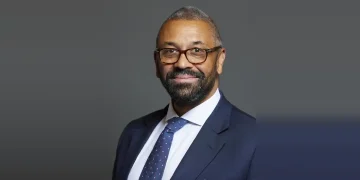














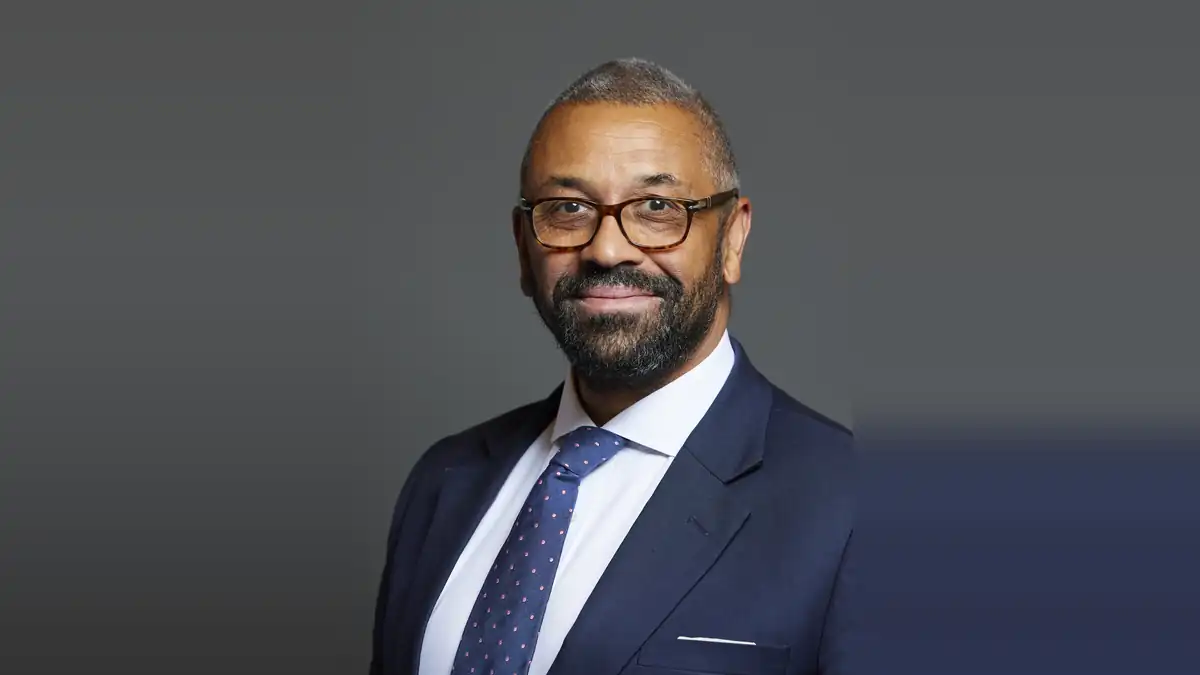
James Cleverly is the Conservative candidate for London mayor in the May 2028 election, after winning 86% of the vote in a ballot of London Tory members on 19 November 2026. The former home secretary faces a Labour fortress and a mayor who has not yet said whether he will stand again.
How did James Cleverly win the Tory London mayor nomination?
The Conservatives announced on Thursday that Sir James Cleverly had taken the nomination outright in the first round, so no second ballot was needed. His 86% share was far above the 50% threshold required to avoid one, according to Politics.co.uk.
He beat Westminster councillor Festus Akinbusoye and former parliamentary candidate Sara Gezdari, with the BBC reporting that he had been widely expected to win. Cleverly stood down from Kemi Badenoch’s shadow cabinet in August to concentrate on the race, and the Telegraph reported that he had already secured the backing of more than half of the party’s London councillors before members voted.
Cleverly, who is the MP for Braintree in Essex, said he is “all in” and will not seek re-selection as an MP, according to the Guardian. The election is due on 4 May 2028, roughly 18 months away.
What is Cleverly promising Londoners?
His pitch is built on safety, housing and cost of living. In his acceptance speech he said crime had risen by a fifth under Lord Khan and that there were fewer police officers in the capital than when the Labour mayor took office. “When I ask Londoners, do you feel safe walking home at night, the answer is no,” he said.
He also attacked the pace of homebuilding, calling it the worst period since the Second World War, and said he would take direct control of holding the Metropolitan Police to account. The Telegraph reported that he has pledged an urgent review of the ultra-low emission zone (Ulez) and has promised to end what he calls Lord Khan’s “war on motorists”.
Cleverly was born in Lewisham, and he reminded listeners that his mother came to London from Sierra Leone. He also cast the contest partly as a stand against Prime Minister Andy Burnham, whom he claimed “can’t stand London”, a charge Labour will almost certainly reject.
He has already shown some independence from his own leader. Last month he said he was sceptical about the economic benefits of a third Heathrow runway, which Badenoch backs, a position that may play well in the south and west of the capital.
How do Labour and the Tories stack up in London?
The arithmetic is tough for the Conservatives. Opinium polling for Mr Akinbusoye’s campaign, published in September, put Labour on 32% in the capital, the Greens on 18%, and the Conservatives and Reform on 17% each. In a head-to-head, 36% said they would back Lord Khan against 21% for Cleverly. That poll was commissioned by a rival in the selection contest, so it should be read with care.
There are warning signs for Labour too. The same polling found 41% of Londoners disapproved of the mayor’s performance, against 34% who thought he was doing a good job.
Labour chairman Bridget Phillipson wasted no time attacking Cleverly’s record, saying he “backed a no-deal Brexit and Liz Truss’s disastrous mini-Budget”. Badenoch, by contrast, said London had been “in decline” under Khan and that it was “time for change”.
Will Sadiq Khan stand for a fourth term?
That remains the biggest open question. Lord Khan, first elected in 2016, has not confirmed whether he will seek an unprecedented fourth term, the BBC noted. His decision this year to accept a peerage has fed speculation that he could instead join a future cabinet, the Telegraph reported.
If he stepped aside, Labour has no obvious successor. The Telegraph named Dawn Butler and Steve Reed as people who have been tipped, with David Lammy and Rosena Allin-Khan mentioned as other possible names. A contest without Khan would change the race, and Cleverly is seen by many Tories as their best hope of winning back votes in the capital.
What happens next?
For now, Cleverly has a long run-in. Expect a slow burn of policy announcements on policing, planning and transport, and pressure on Khan to say whether he is running. Labour will pick its own candidate later, and the Greens and Reform will both try to eat into the vote.
For Londoners, the practical effect is limited until 2028, but the arguments will shape the debate on Ulez charges, the Met and housebuilding well before then. Political fallout from the capital also touches national stories, such as Burnham’s Brexit reset talks and the Home Office’s asylum changes. Follow more Westminster coverage in our Politics section.