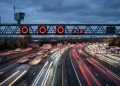


















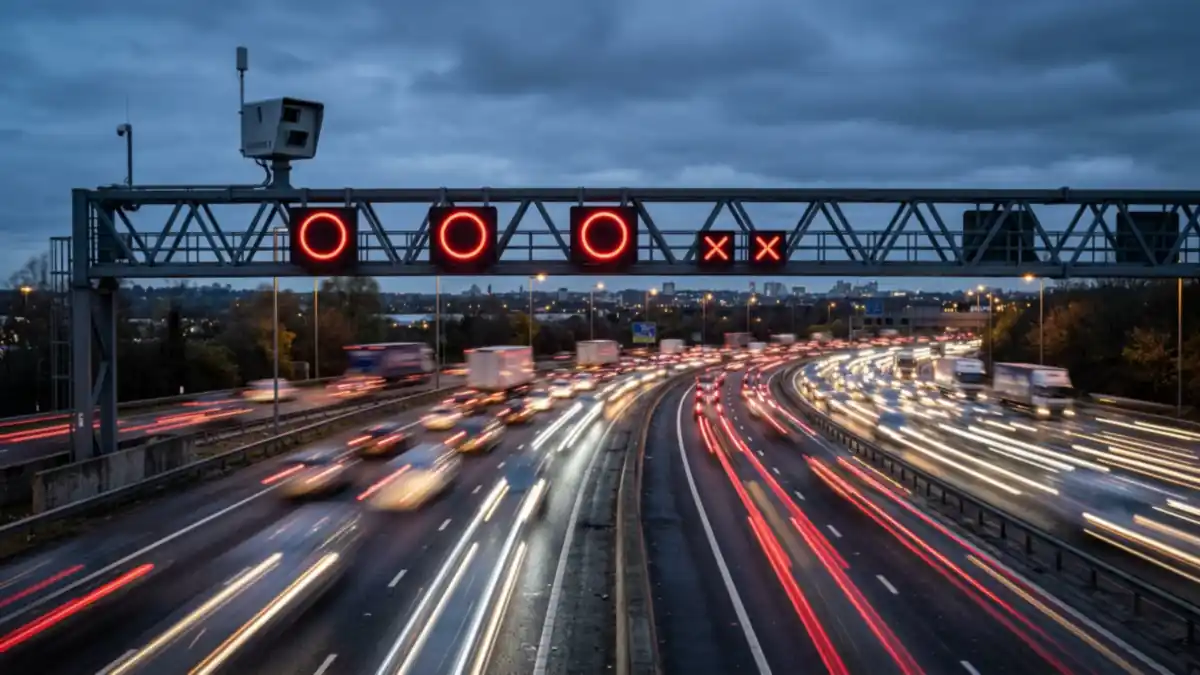
A newly discovered speed camera fault has led the Home Office to strip the variable speed cameras on England’s smart motorways of their legal approval, meaning their footage can no longer be relied on as straightforward evidence against speeding drivers. National Highways confirmed on 17 November 2026 that it is ending its contract with the cameras’ US supplier, Verra Mobility, and ministers admit a full fix will not arrive until next year.
The decision was set out in a written statement to Parliament by roads minister Justin Madders, who said the government was not prepared to accept even a hypothetical risk that some drivers could be wrongly prosecuted. It is the second problem with the same camera system in less than a year.
What is the speed camera fault?
The original problem surfaced in December 2025, when National Highways admitted an “anomaly” in the way some variable speed cameras talked to the overhead signs. On roads where the limit was raised, a driver could see one speed on the gantry while the camera was still working to the previous, lower limit. That error led to 2,650 wrongful camera activations between 2021 and the end of 2025, and the BBC reported at the time that 154 out of 400 cameras were affected. Drivers who were wrongly fined have since been reimbursed.
While testing the system with the Home Office after that discovery, National Highways found a second, separate issue in how the cameras may activate in “specific circumstances”. The government says both problems trace back to an upgrade and installation of the camera system that began in 2019.
Officials stress the new fault is a remote risk. National Highways’ modelling puts the probability of the circumstances that could trigger it at no more than 0.1%, and the department says there is no real-world evidence that it has affected enforcement. Unlike the first fault, the latest problem is less about drivers being wrongly caught and more about whether the evidence would stand up, which is why, as the BBC put it, some drivers may have slipped through the cracks.
Which roads and cameras are affected?
According to the BBC, the fault affects all of the variable speed cameras on smart motorways, along with a section of the A14 between Huntingdon and Cambridge and the A1 approach junction to the A14. The government describes the issue as affecting a very small number of cameras on a limited proportion of the strategic road network. For context, there are around 4,000 speed cameras across England’s entire road network, the large majority of which are not involved.
The Home Office has revoked the system’s “type approval”, the official status that allows camera data to be admitted more easily as evidence of fact in court. It concluded that the problems could not be resolved to its satisfaction within any reasonable timeframe.
“We can’t take chances with this,” Mr Madders said. “If we’re going to prosecute people, we need to be confident the system is working as it should.”
Why is National Highways dropping Verra Mobility?
National Highways bought the camera system on the basis that it held Home Office type approval. With that approval gone, the agency said it is ending its contractual relationship with Verra Mobility to use the cameras for enforcement, and is “considering all further commercial and legal options that may be appropriate”. The BBC said it had contacted Verra Mobility for comment.
Alongside the statement, the Department for Transport published the Westall Review, an independent report led by Tracy Westall OBE into how the original fault arose and how National Highways handled it. It looks at missed opportunities to spot and escalate the problem and makes recommendations across seven themes, from data and technology to crisis handling, corporate governance and procurement. The government and National Highways have both accepted the recommendations in full, and Ms Westall concluded they remain valid in light of the newly discovered issue.
Speed camera fault: what it means for drivers
The short answer for motorists is that nothing changes about the law. The variable speed signs on smart motorways will stay switched on to manage traffic flow and safety, and the limits they display are still legally binding. The government’s message is blunt: if you break the law, you should expect enforcement action.
What changes is how that enforcement happens. National Highways has put extra traffic officer patrols on the affected stretches from 17 November 2026 and is using existing CCTV and automatic number plate recognition cameras to monitor compliance. Mr Madders said speed limits will continue to be policed with mobile cameras and marked and unmarked police patrols. Existing safety measures, including the stopped vehicle detection radar on all lane running sections, remain in place.
Drivers who believe they were caught by the original fault and have not been contacted should note that the government says it will keep offering redress to eligible people as they are identified.
What happens next?
The immediate question is how long smart motorways will rely on patrols rather than fixed cameras. Ministers have conceded the camera system will not be fully fixed until some point next year, and with the supplier’s contract being ended, a replacement system may need to be procured and approved first. The Department for Transport says it will monitor National Highways’ progress on the Westall recommendations through its existing oversight arrangements.
It is not the only motoring story on drivers’ minds, with many still waiting for diesel prices to follow petrol down from their peak. For more coverage of the roads and the cost of driving, see our Motoring section and the latest from our UK News desk.