

















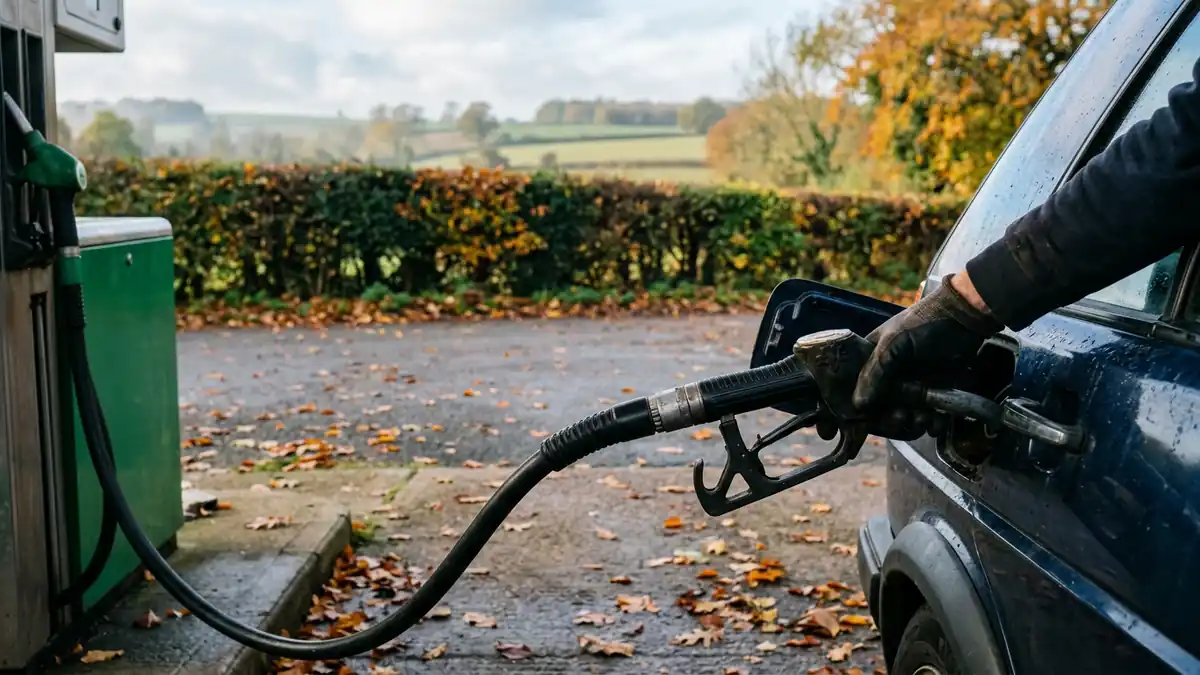
Petrol prices across the UK have fallen by almost 10p a litre from October’s peak, but drivers in towns and cities are still paying well over the odds compared with rural forecourts, while diesel motorists have seen only a modest easing from record highs.
The average price of a litre of unleaded started this week at 165.2p, according to figures from the AA reported by Fleet News. That is 9.5p below the 174.7p peak recorded in the first week of October, the highest level since August 2022, and the motoring organisation expects the fall to reach a full 10p during the course of this week.
For a typical family car with a 55-litre tank, a 9.5p drop works out at roughly £5.20 off a fill-up. More than 4p of the reduction came in the last week alone, Auto Express reported.
Why petrol prices have been slow to fall
The cuts reflect a sharp drop in wholesale costs. The AA said earlier this month that the wholesale price of unleaded fell from 77p a litre on 13 October to 68p by the end of the month, and had since slipped below 62p. That is a far bigger reduction than drivers have so far seen at the pump.
The AA blames the sluggish pace partly on “price-matching”, where retailers wait for rivals to move before cutting their own prices, and partly on the absence of the supermarket price wars that once accelerated reductions. It took six weeks to reach the current level. By comparison, during the price crash of summer 2022, the average litre of petrol fell by 12.41p in just three weeks.
Luke Bosdet, the AA’s spokesperson on pump prices, said: “Average UK petrol pump prices are back to where they were in early September, yet there are small communities charging prices last seen in July this year. Such is often the gap between town and out-of-town fuel retailers.”
Rural forecourts lead the way
Drivers hunting for petrol at 155p a litre or less, about 10p below the national average, will usually need to head out of town, the AA said. Smaller community fuel stations appear less concerned with matching nearby competitors than with offering keen prices to local customers and passing trade. Northern Ireland, as is often the case, stands apart, with petrol below 150p a litre now appearing.
Last week the AA singled out locations including Shrewsbury, Bishop Auckland, Selkirk and Penistone as already offering petrol under 160p, while noting that London and the South East had no stations at those bargain levels. Bosdet described forecourts still charging close to October’s peak, given the fall in wholesale costs, as “unforgivable”.
The motoring group is urging drivers to make use of apps powered by the government’s Fuel Finder scheme, which requires forecourts to report their prices so they can be displayed publicly. “Now, only Fuel Finder-powered apps direct drivers to where they can locate the much cheaper fuel,” Bosdet said.
Diesel drivers still feeling the pinch
The picture is much less encouraging for diesel. The average price stands at 195.4p a litre, having touched £2 in the first week of October. That is a fall of only around 4.5p, roughly half the reduction seen on petrol.
Part of the explanation lies in global supply. Speaking in London last week, US Federal Reserve governor Christopher Waller said the cost of insuring tankers through the Strait of Hormuz, and of the ship-to-ship transfers needed to guard against Iranian attacks, was reportedly adding $20 to $30 a barrel to oil prices, the Guardian reported. He added that limited refining capacity meant diesel prices were unlikely to ease as readily as crude.
For hauliers, tradespeople and the millions of private motorists who still run diesel cars, that means a prolonged period of elevated costs. Readers can find more on how the Gulf crisis is shaping energy bills in our report on renewed tensions in the Gulf and the UK’s winter energy costs.
Watchdog keeps a close eye on retailers
The Competition and Markets Authority has been publishing regular updates on the fuel market this year at Downing Street’s request. According to Auto Express, the regulator has so far found little evidence of retailers exploiting high wholesale costs, but has highlighted weak competition and “passive pricing” as factors keeping prices high.
“We will continue to monitor prices and margins closely and expect any reductions in wholesale prices to be rapidly and fully passed on to drivers,” said the CMA’s chief executive, Sarah Cardell. She added: “The more motorists make use of Fuel Finder-backed services, the better it works – saving money now and driving down prices in the long run.”
Bosdet also called on the government, which kept the 5p fuel duty cut in place in the Autumn Budget, to consider how it might “encourage” urban retailers to pass on savings more quickly.
What drivers can do now
With further cuts expected, motorists who can wait a few days before filling up may benefit, particularly petrol drivers. Checking a Fuel Finder-backed app before setting off and comparing prices in and out of town remain the simplest ways to save. Diesel drivers, however, should not expect dramatic relief until global supply pressures ease.
For the latest updates on fuel costs, electric cars and road rules, follow our Motoring section.