



















Russia has warned that Estonia, a NATO and European Union member, is “on the verge of triggering open war” after Tallinn said it will close its road border crossings with Russia from 1 December. Estonia has rejected the claim, and no military action has been announced, but Britain leads the NATO force stationed in the country.
Key points
- Russia’s Foreign Ministry summoned Estonia’s chargé d’affaires, Marek Uhtegi, on 23 November 2026 and said Estonia’s actions were “on the verge of unleashing open war”.
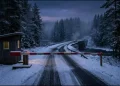
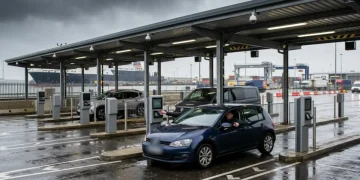
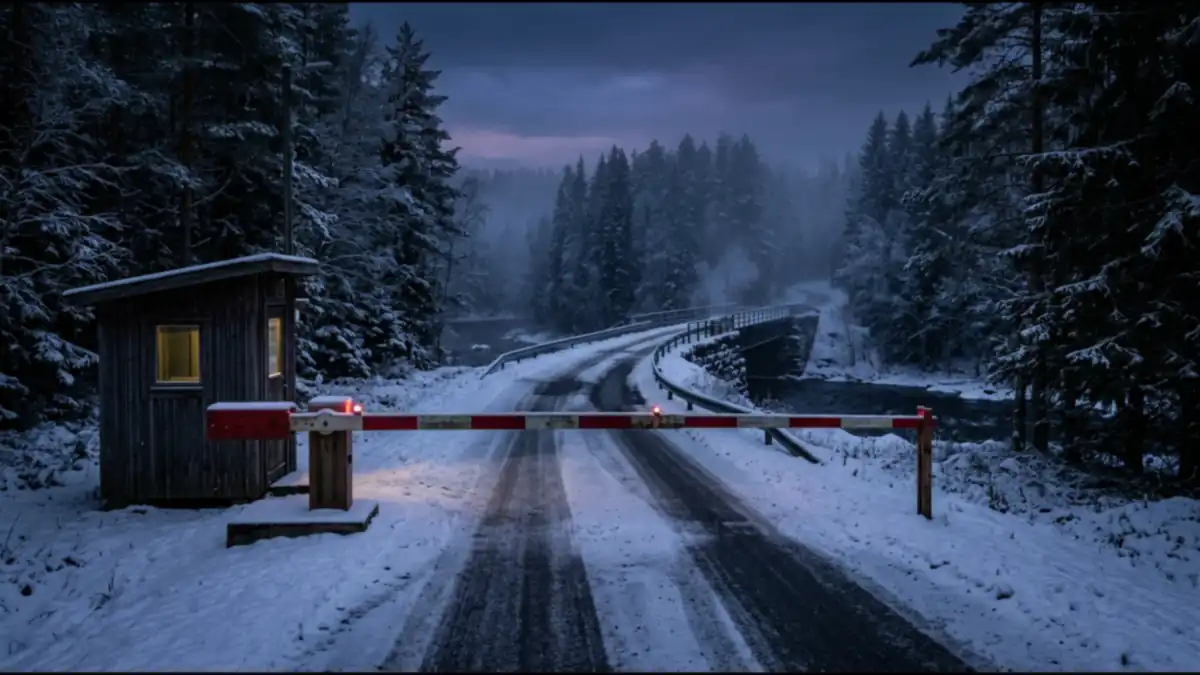
- Estonia will close its road crossings at Narva, Luhamaa and Koidula from 1 December 2026 for at least six months.
- Tallinn says the move follows an attempted arson attack on a defence firm that its security service blames on Russian military intelligence; Moscow denies involvement.
- The United Kingdom is the framework nation of NATO’s battlegroup in Estonia, based at Tapa.
Why is Russia threatening open war with Estonia?
Moscow’s anger centres on Estonia’s decision to shut its land border. Russia’s Foreign Ministry said on Monday that the closure would “inevitably backfire”, hurting Tallinn and its allies in the EU and NATO, and that it reserves the right to take “comprehensive political and diplomatic measures”.
The ministry also bundled in older grievances. It accused Estonia of “tacitly” letting Ukrainian drones use its airspace to hit targets in north-western Russia, of obstructing Russian cargo ships in the Baltic Sea, of banning the transit of Russian and Belarusian grain, and of moves against the Russian language and the Russian Orthodox Church, according to Al Jazeera.
Estonia’s Foreign Ministry replied that the country “has never allowed, and will never allow, its territory to be used for military operations by another country”. Foreign Minister Margus Tsahkna accused Moscow of trying to divert attention from its own actions, pointing to Russian missiles reaching Polish territory, a Russian-ordered assassination plot identified in Denmark and the foiled arson attack in Estonia, as reported by CNBC.
What triggered the Estonia border closure?
Estonia’s border decision followed an attempted arson attack on the Viimsi premises of Threod Systems, a drone manufacturer north of Tallinn. Eight Latvian citizens were detained, and Estonia’s Internal Security Service, Kapo, said the plot was ordered by Russia’s military intelligence agency, the GRU, according to Dagens.
Prime Minister Kristen Michal said closing the border would reduce the threat to people in Estonia and send a clear message that attacks on the country’s defence industry are unacceptable. Estonia shares a 294-kilometre border with Russia, and Finland has already closed its own land crossings.
How is NATO responding?
NATO Secretary-General Mark Rutte, speaking in Berlin, said the alliance was watching events in Estonia, along with a recent incursion by Russian missiles into Poland. He said NATO would “always make assessments of our deterrence and defence and make updates where necessary”.
The rhetoric lands amid a run of incidents around the Baltic. A Russian cargo ship, the Sparta II, was hit by a suspected Ukrainian drone in the Gulf of Finland on 21 November, and Finland summoned the Russian ambassador after a Russian helicopter was suspected of violating its airspace, RTÉ reported. Finland’s prime minister, Petteri Orpo, said the war was “spilling over” into the region.
Background
Estonia has been one of Kyiv’s most outspoken backers since Russia’s full-scale invasion in February 2022, and has repeatedly warned of sabotage against NATO countries supporting Ukraine. Russian officials have long accused Baltic states of letting Ukrainian drones cross their airspace; Kyiv says such incursions result from Russian signal jamming.
What does it mean for the UK?
Britain has a direct stake. The UK has led NATO’s multinational battlegroup in Estonia since 2017, with troops stationed at Tapa, and France contributes a company-sized unit, according to the Estonian Ministry of Defence. A July 2026 UK-Estonia defence roadmap will lift UK troop numbers there to 1,200 from April 2027.
That makes Moscow’s language more than distant noise for British readers: any serious escalation would put UK forces and NATO’s Article 5 commitments in the frame. For now, the practical consequences are diplomatic and economic. Expect tighter border controls from 1 December, more Baltic security patrols and continued pressure on Western governments over sabotage plots. Our World coverage will follow the next moves.
What happens next?
The crossings are due to close on 1 December, with a review after six months. Russia has not said which countermeasures it may choose. The Estonian government has so far held its line, and analysts quoted by CNBC say a near-term peace deal between Russia and Ukraine looks unlikely, so tension on NATO’s eastern flank is likely to persist through the winter. Related reading: what Ukraine’s drone sinking off Libya means for the UK.